
AI-reimagined OneSupport experience for next-generation healthcare operations

Overview
This case study documents a 2025 AI-assisted UX redesign exercise of the OneSupport web application, originally designed in 2018 for Getinge.
The objective of this exercise was not to replace or critique the original work, but to revisit the same complex healthcare problem space using modern AI design tools (Google Stitch AI) and 2025 enterprise UX standards—while staying grounded in the original business, regulatory, and user constraints.
Background (2018 Context)
In 2018, OneSupport was designed to unify 15+ fragmented global complaint-handling systems into a single platform for managing medical product complaints. The system had to support:
- Highly regulated healthcare workflows
- Multiple global roles (Sales, Service, QA, IT, Admin)
- Large, data-heavy forms (80+ fields)
- Auditability, traceability, and compliance
The original UX work focused on standardisation, usability, and operational efficiency within the constraints of tooling and enterprise design maturity at the time.
Why Redesign in 2025?
Since 2018, the UX landscape has evolved significantly:
- AI-assisted design tools can now generate, iterate, and validate UI at scale
- Enterprise UX has shifted toward modular systems, role intelligence, and adaptive interfaces
- Expectations around speed, clarity, and accessibility have increased
- Designers are expected to orchestrate systems, not just screens
This redesign explores a key question:
How would OneSupport look if it were redesigned today—using AI as a design accelerator, while retaining deep human-centred judgment?
Role & Scope
Role: UX Strategist & Design Lead (AI-assisted redesign)
Tools: Google Stitch AI, system-thinking frameworks
Scope:
- End-to-end web application redesign
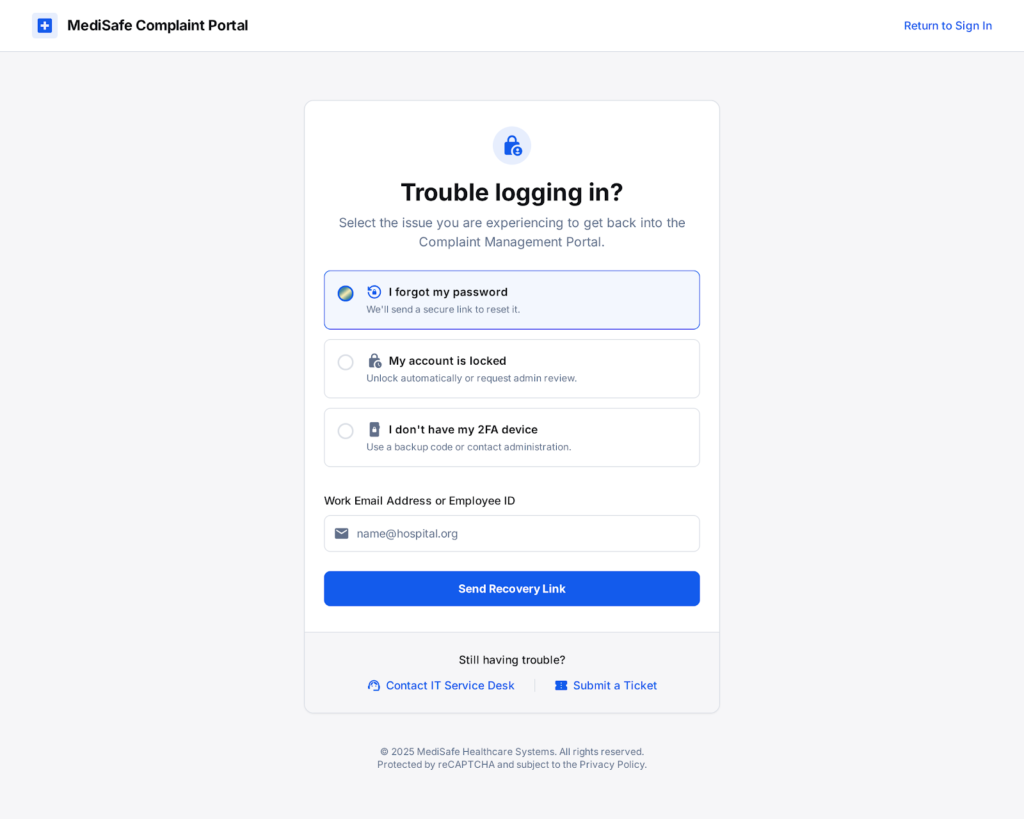
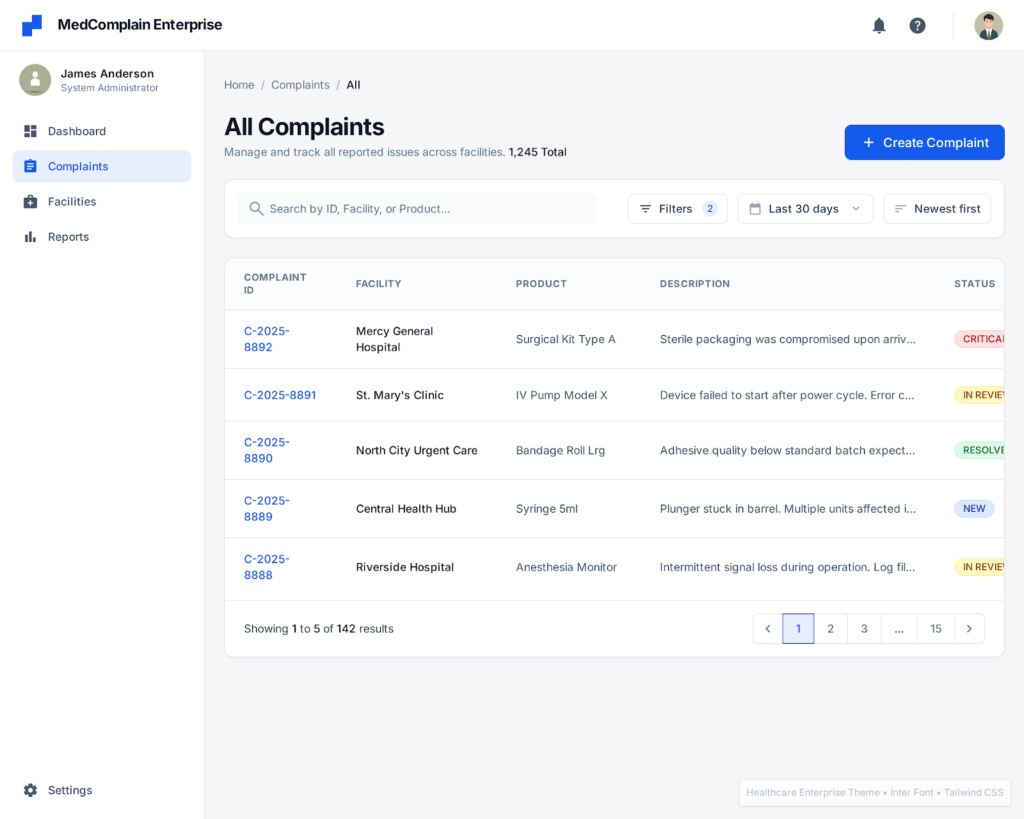
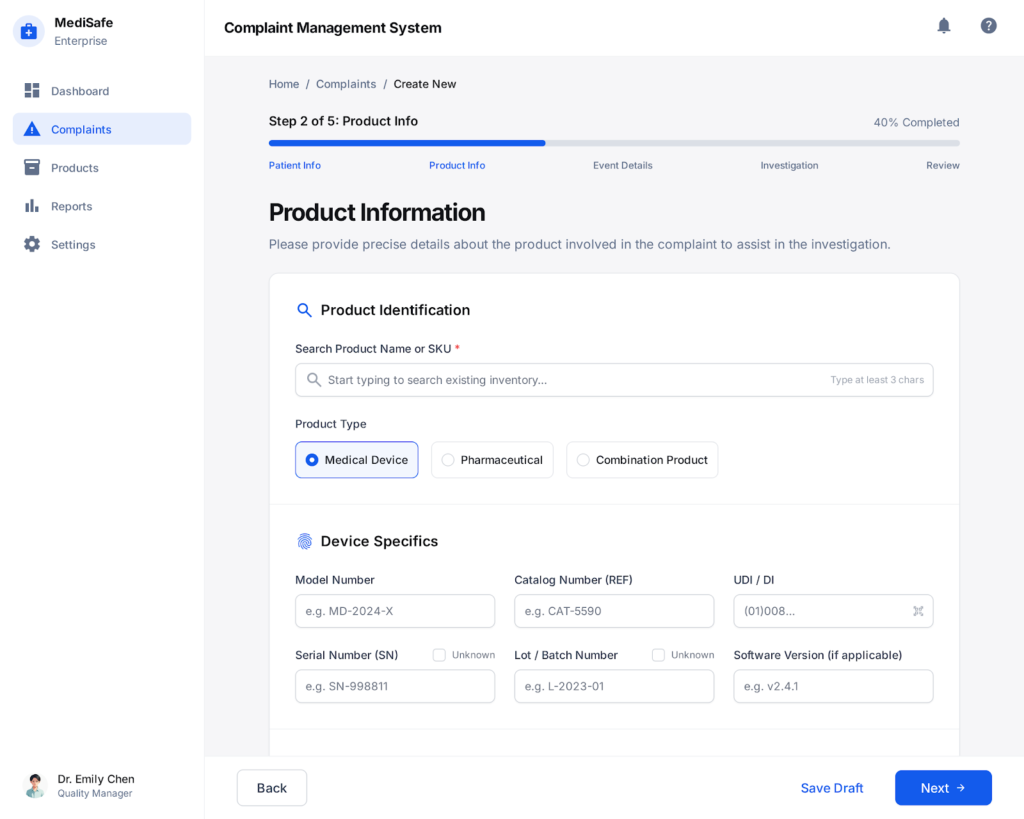
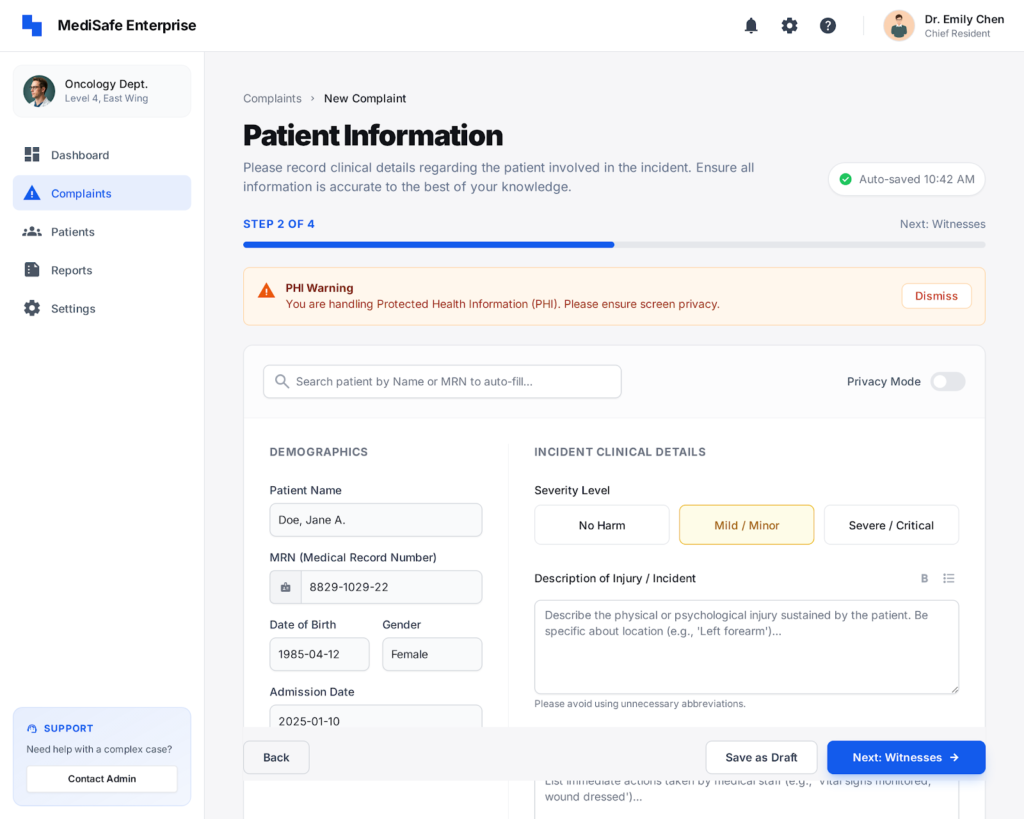
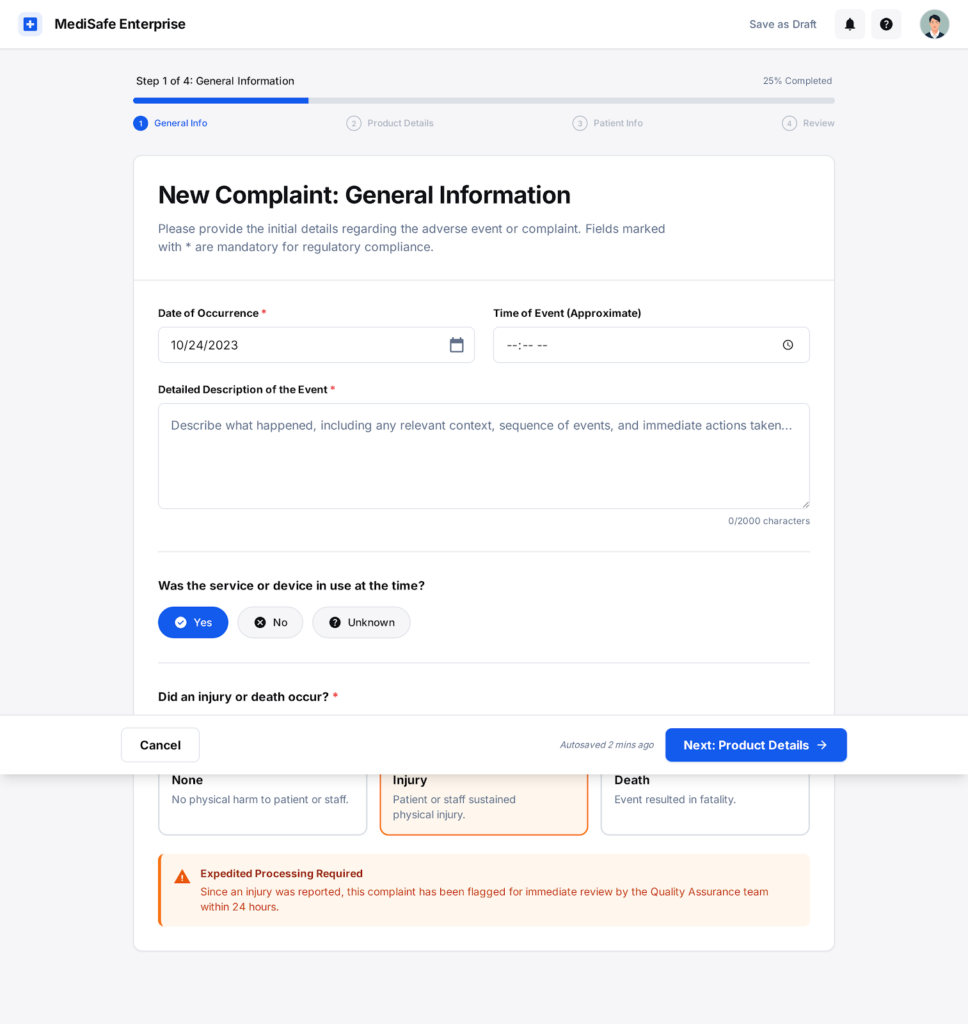
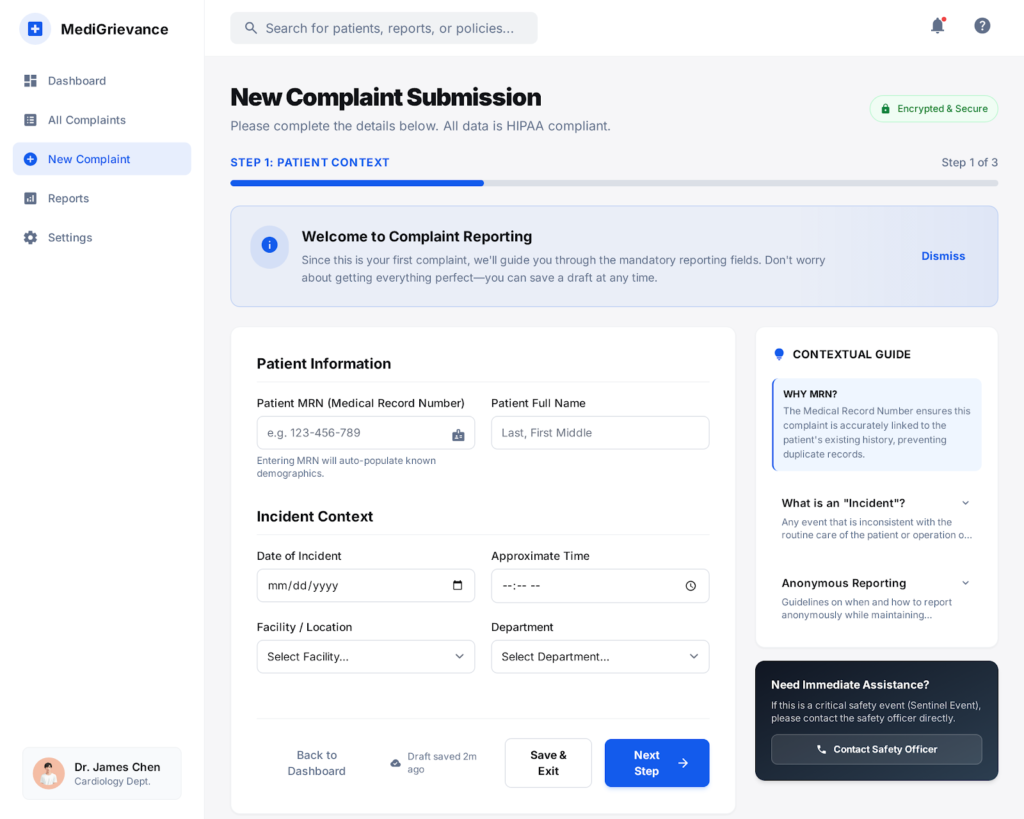
- Core workflows: authentication, dashboard, complaints lifecycle
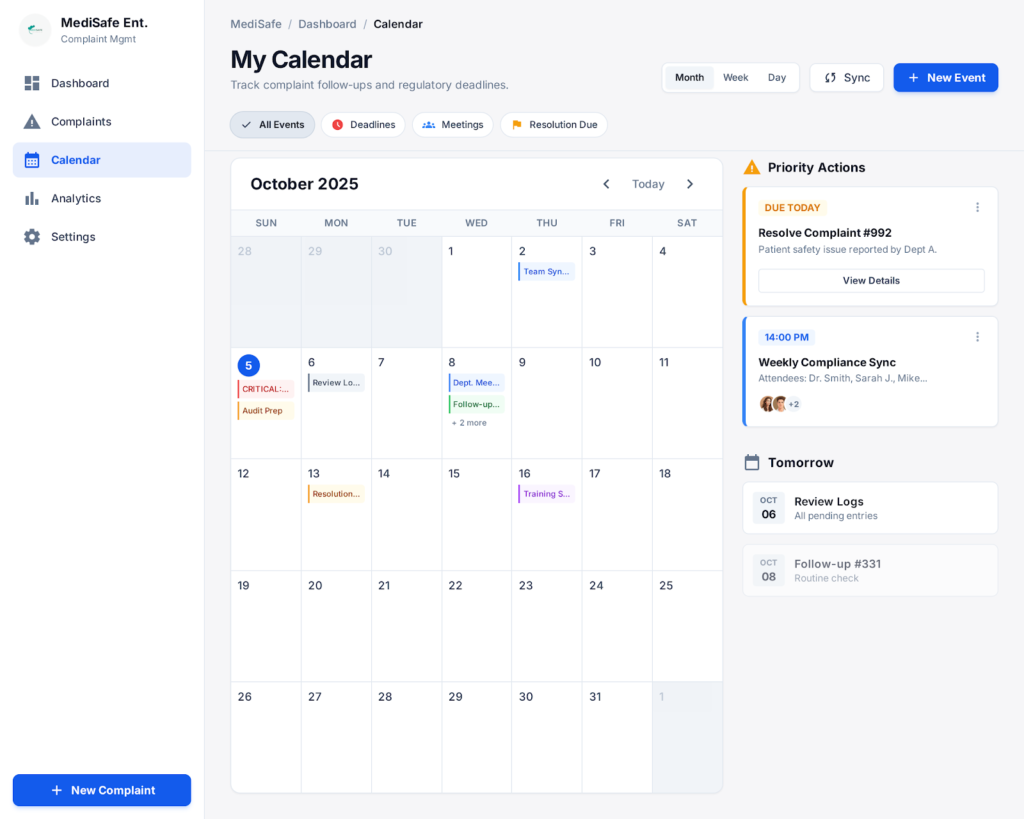
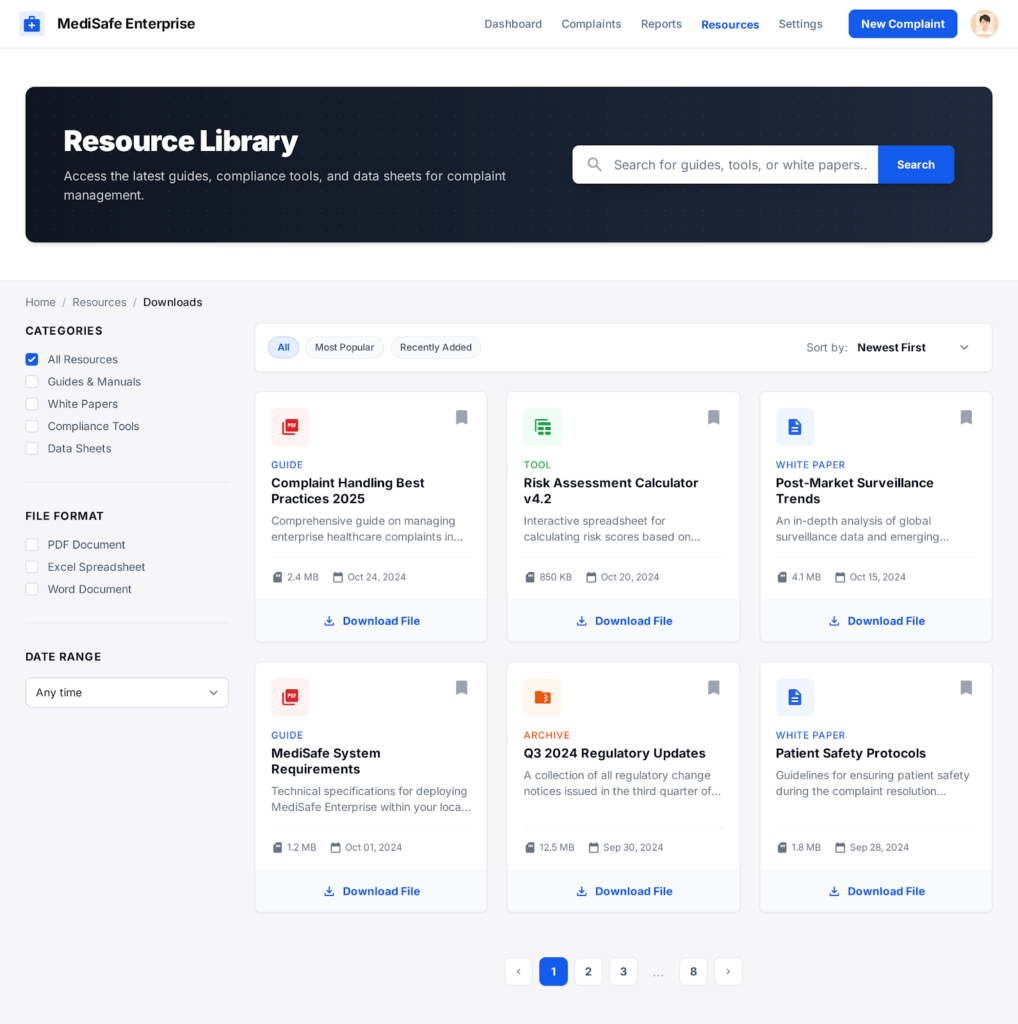
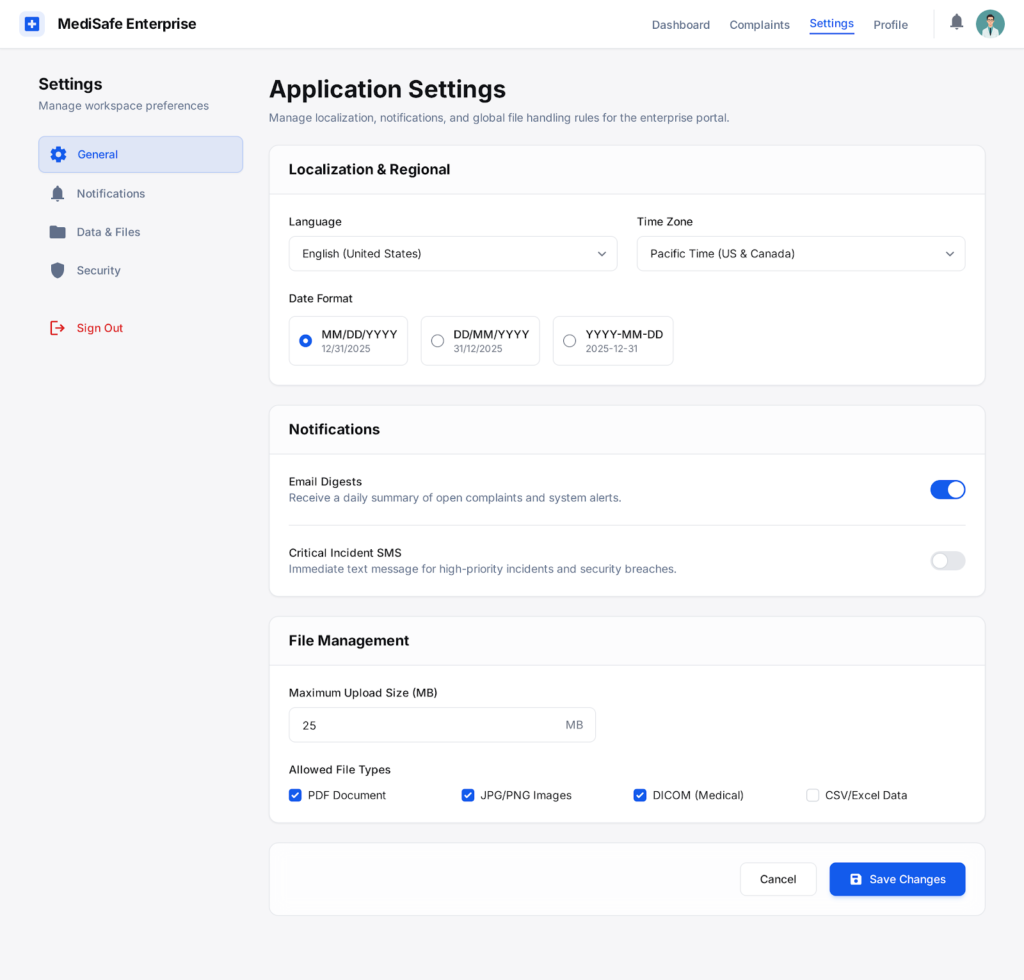
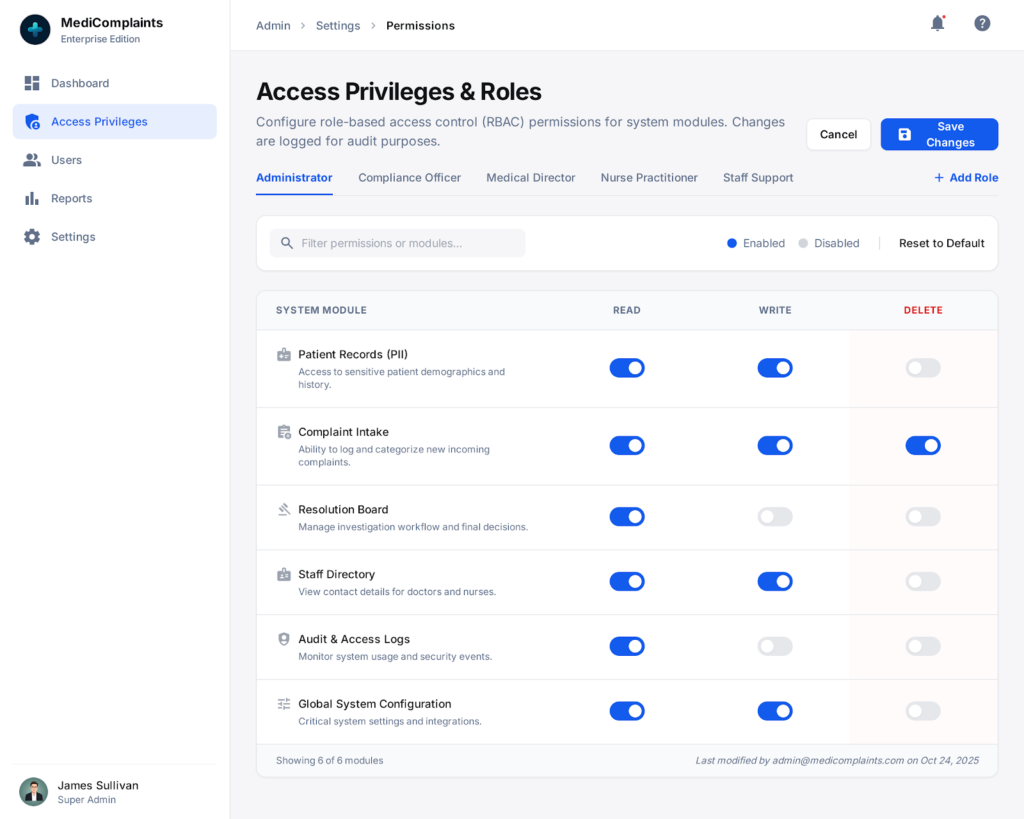
- Supporting areas: notifications, downloads, calendar, access control
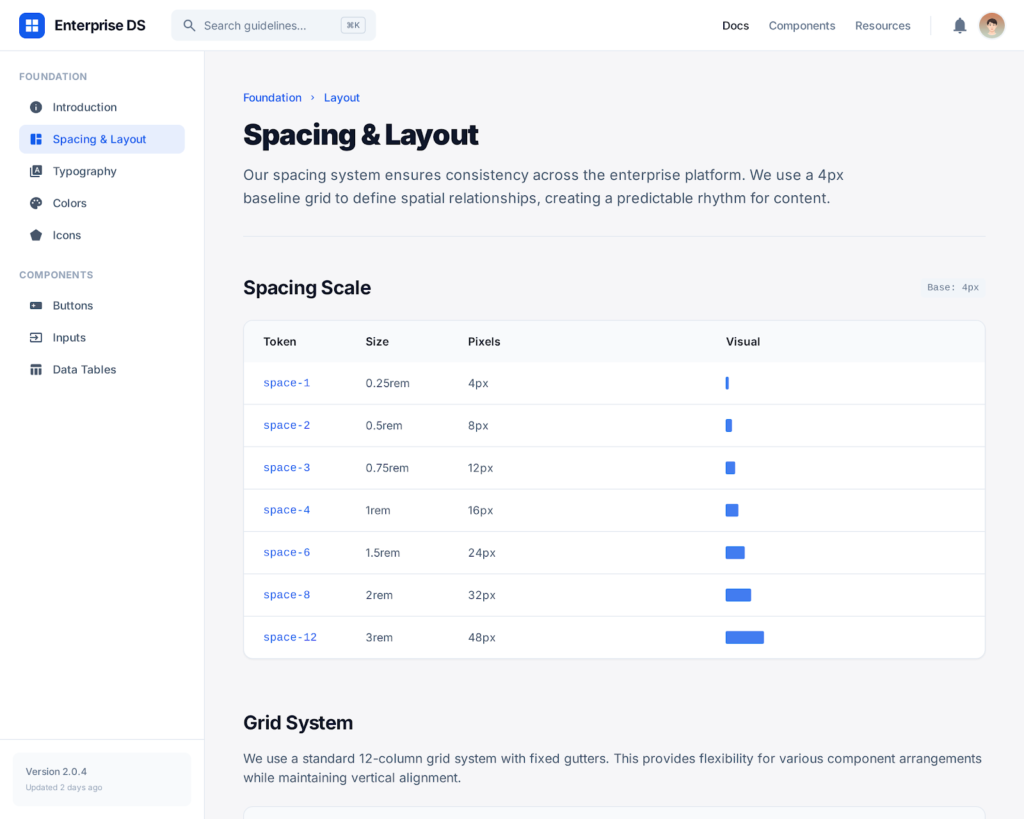
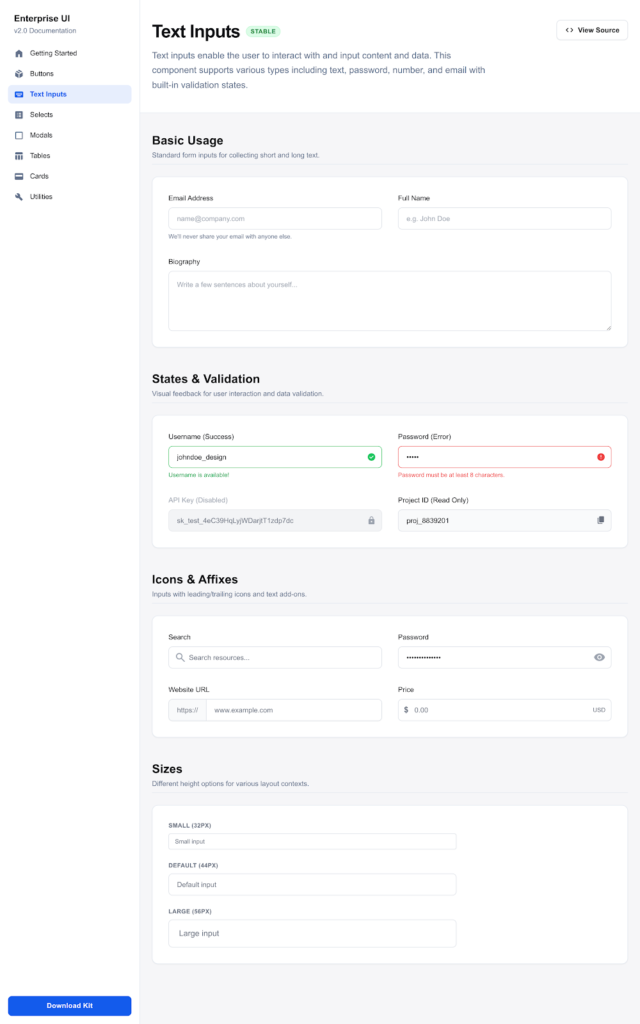
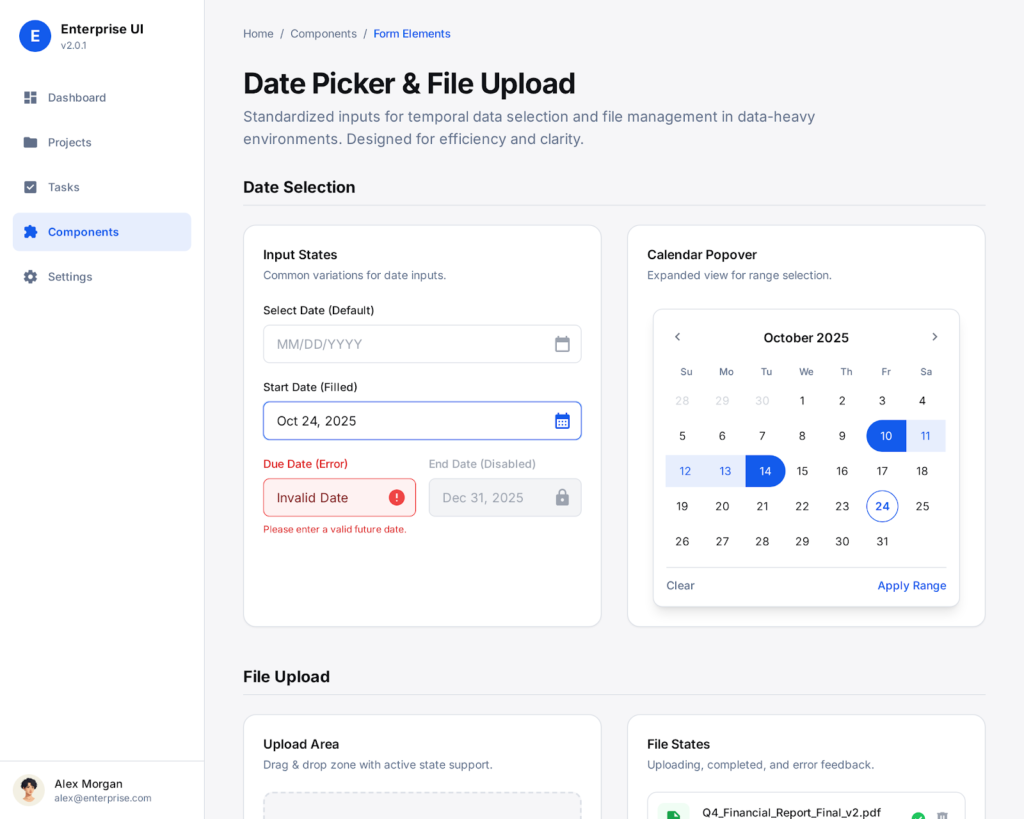
- UI component library and design system thinking
Design Approach (AI-Assisted)
Rather than manually recreating screens, this exercise focused on prompt-driven design orchestration:
1. Constraint-First Prompting
AI was guided with:
- Clear functional requirements
- Enterprise UX principles
- Regulated healthcare context
- Role-based mental models
Visual styling, colour systems, and layouts were intentionally left to AI to surface modern design patterns.
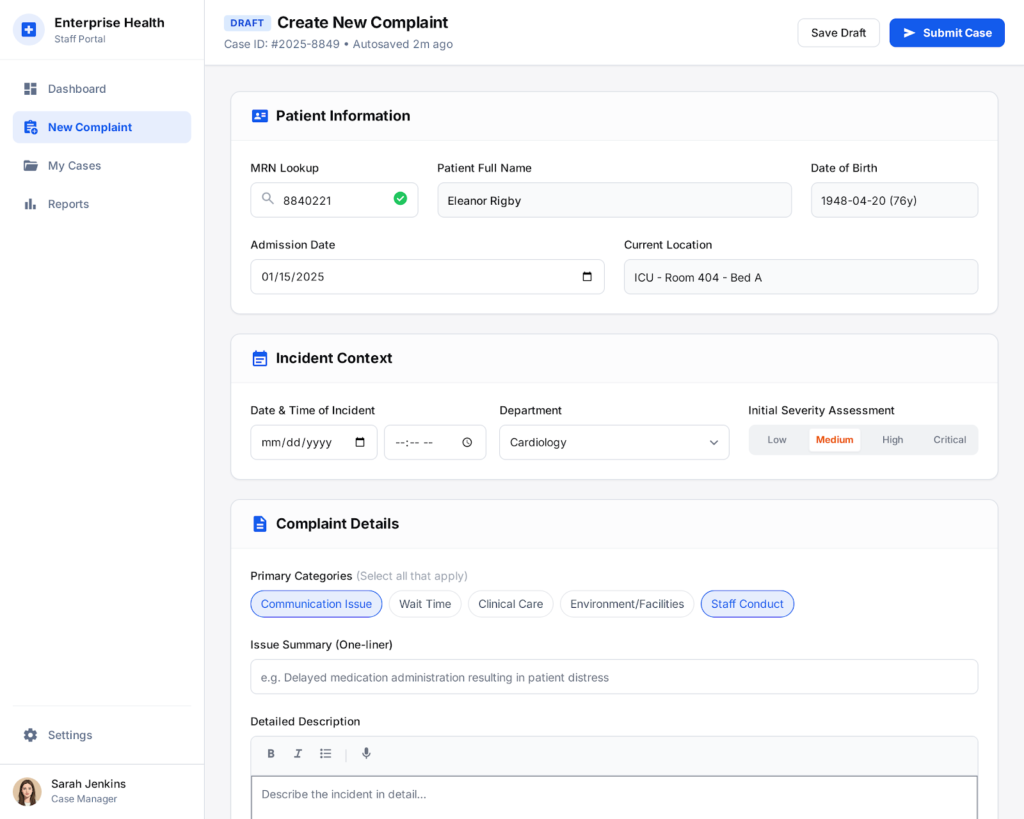
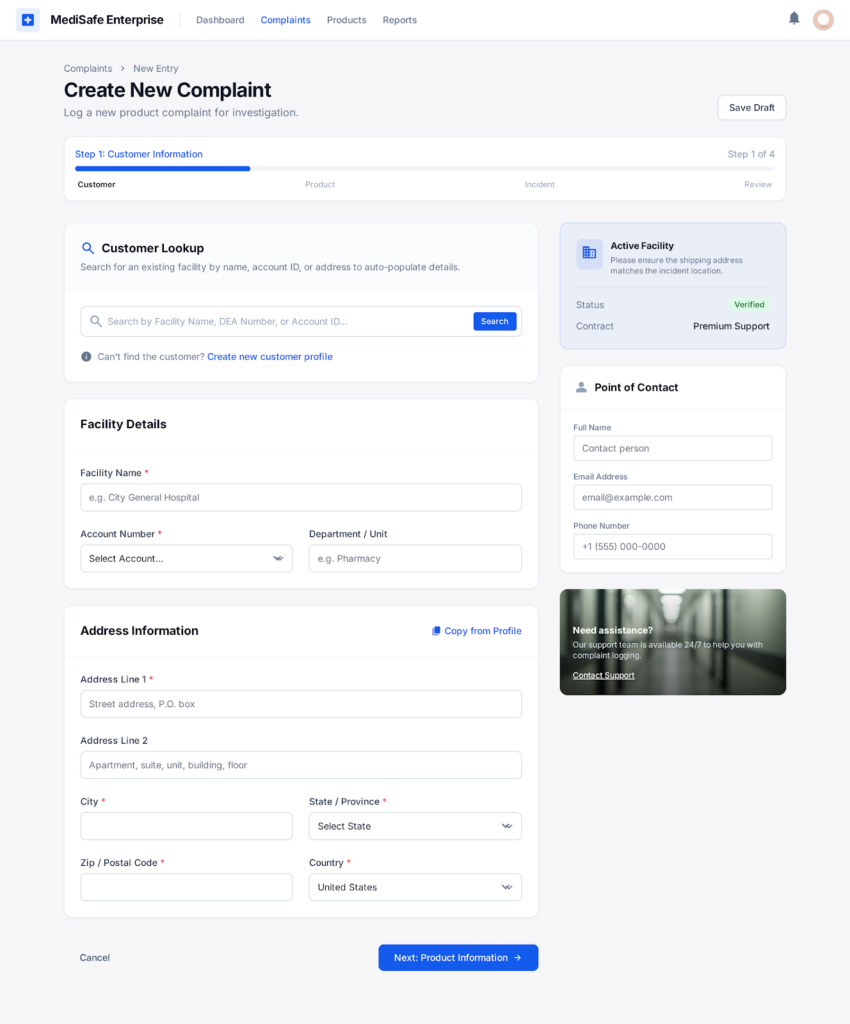
2. Multi-Path Complaint Creation
The redesign reinforced two core user modes:
- First-time users: Guided, step-by-step complaint flow
- Regular users: Power-user mode with all fields visible
This mirrors real-world enterprise behaviour—balancing speed vs support.
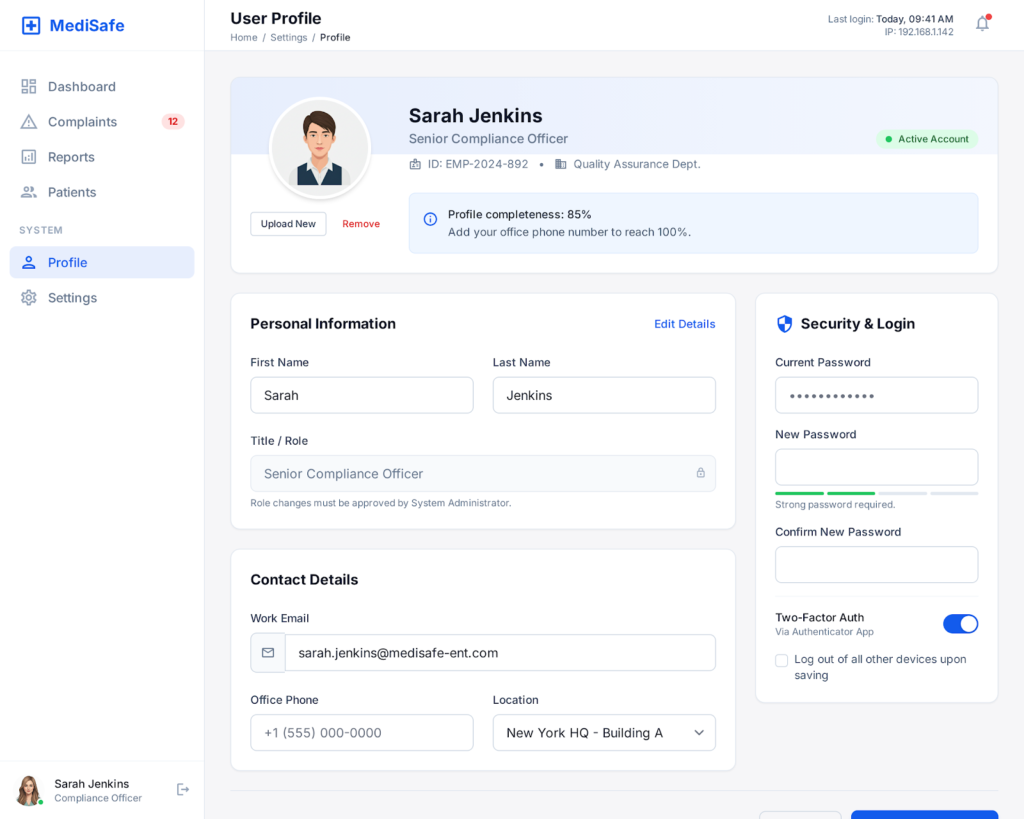
3. Modular, Role-Aware Architecture
AI-generated layouts emphasised:
- Clear separation of concerns
- Reusable components
- Scalable navigation patterns
- Role-specific dashboards and permissions
4. Progressive Disclosure
Complexity is revealed only when needed:
- Collapsible sections
- Contextual guidance
- Review-before-submit checkpoints
This reduces cognitive load without sacrificing data completeness.
Key UX Improvements in the 2025 Redesign
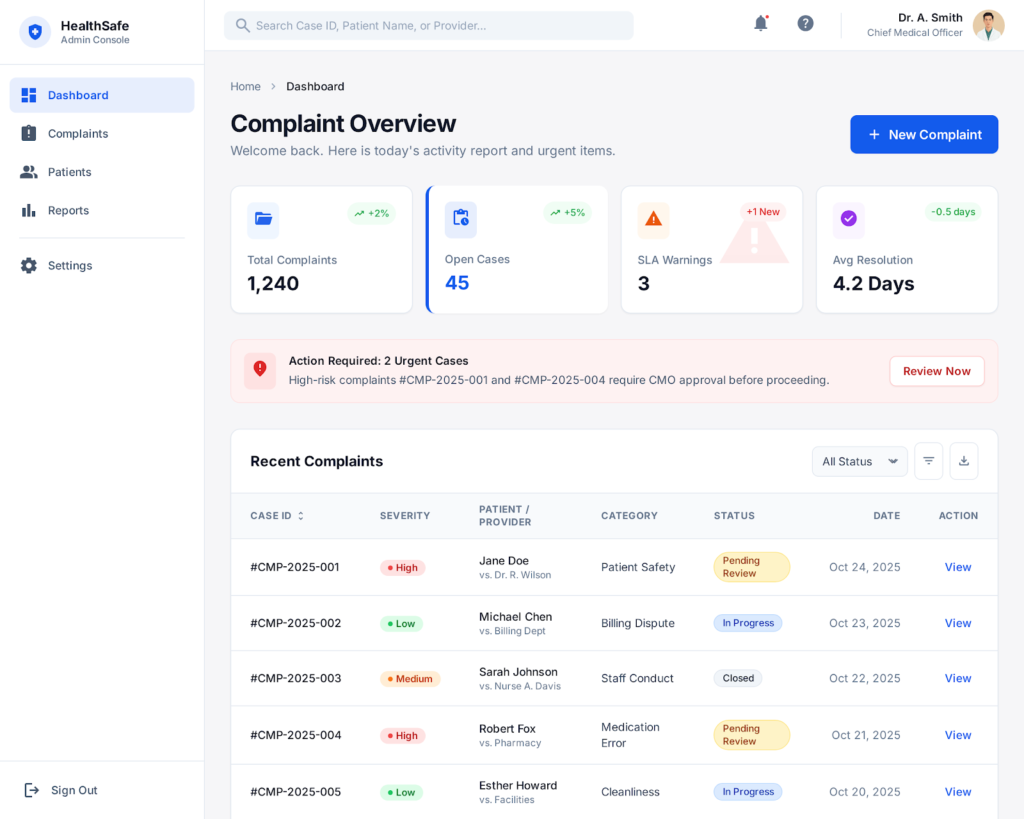
Modernised Dashboard
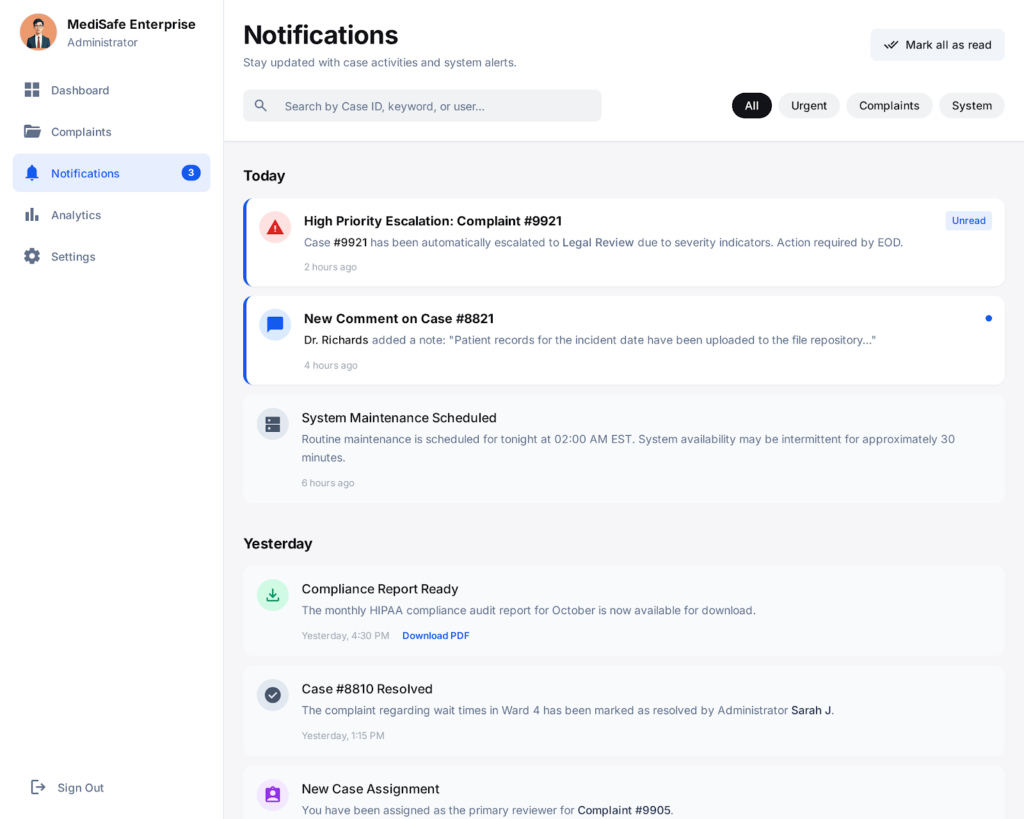
- Clear system status visibility
- Action-oriented alerts
- Faster scanning of complaint health
Smarter Complaint Lifecycle
- Logical step sequencing
- Strong review and confirmation moments
- Clear post-submission traceability
System-Level UX Maturity
- Unified notifications
- Calendar-driven follow-ups
- Centralised downloads and references
- Transparent access privileges
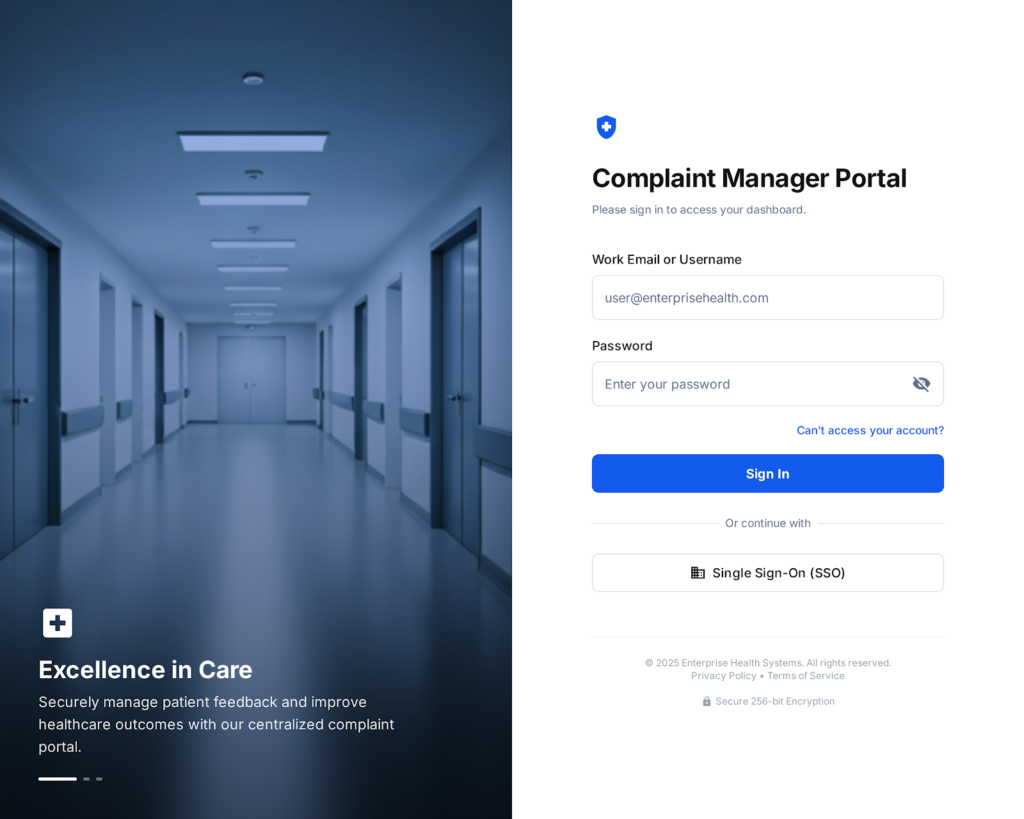
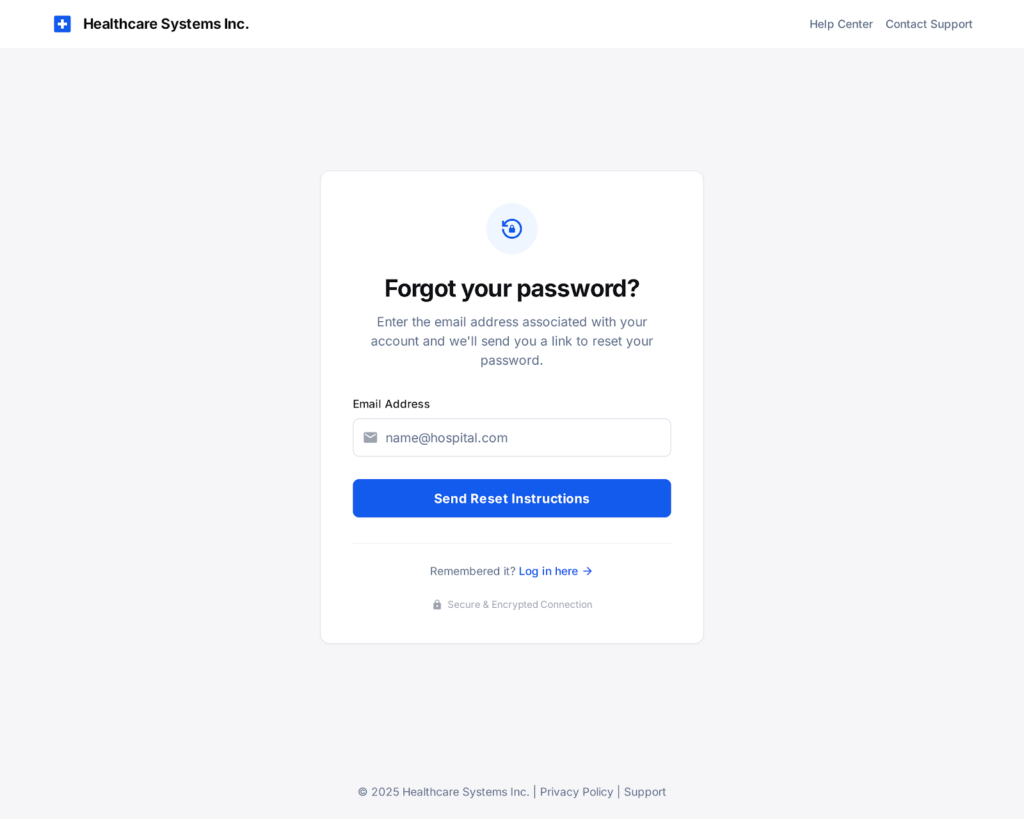
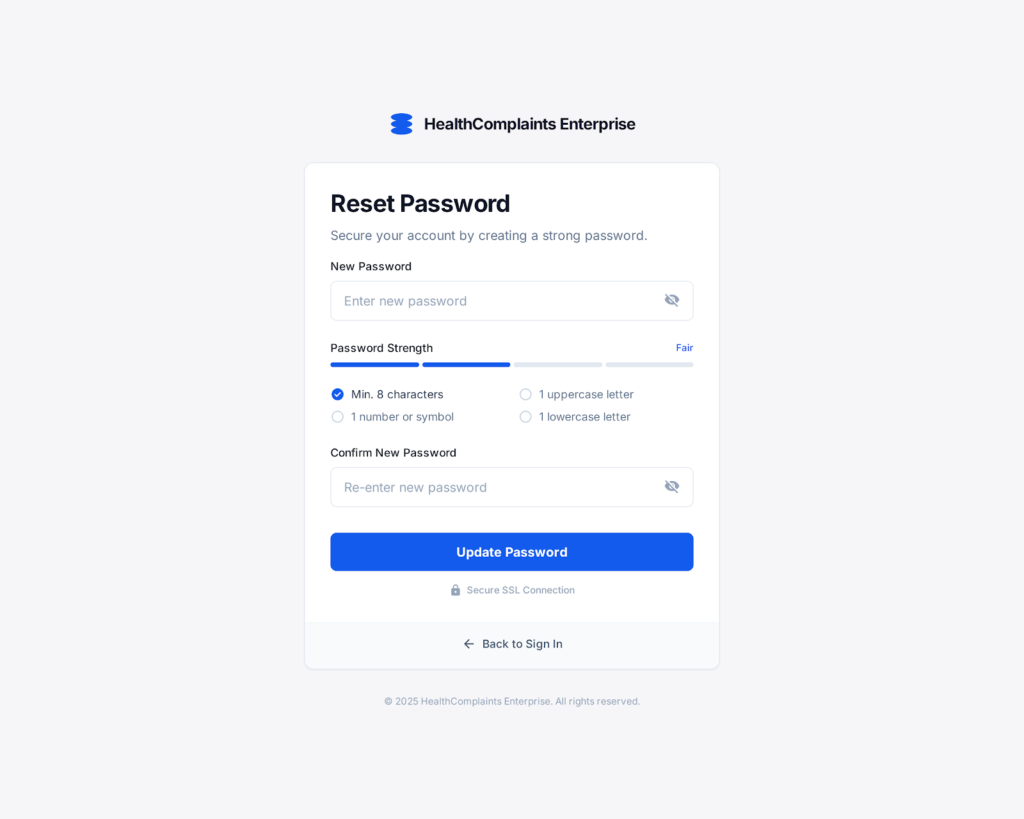
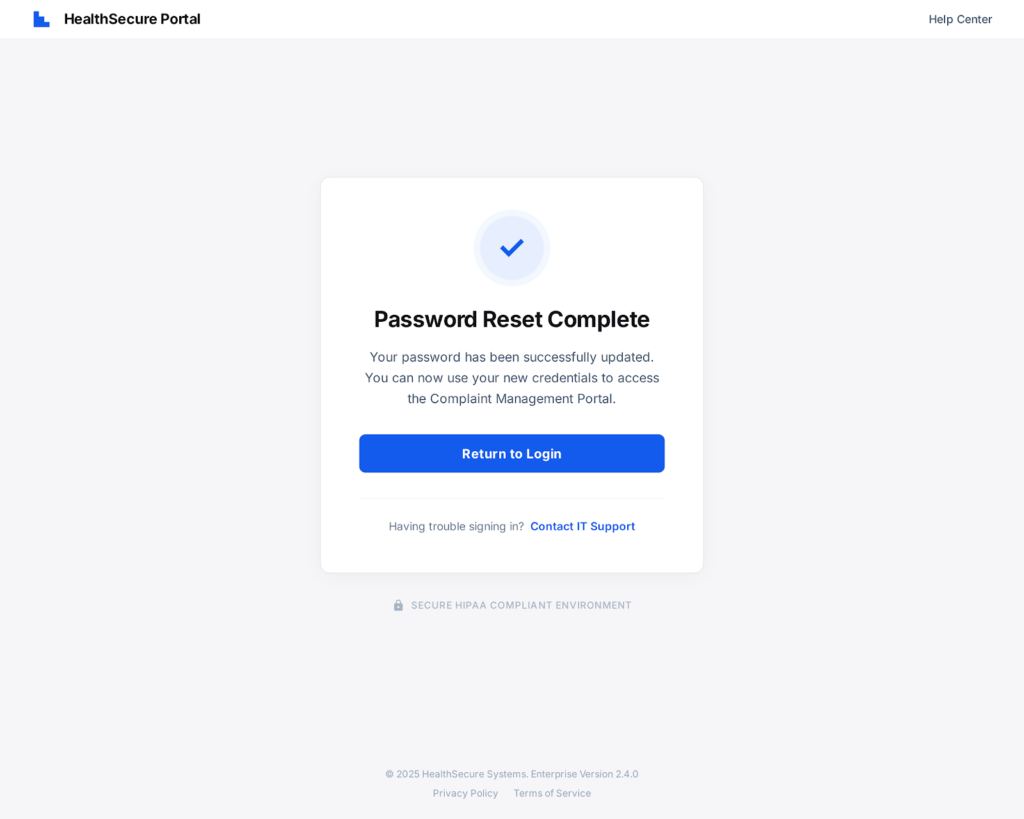
What AI-enabled
Using Google Stitch AI accelerated:
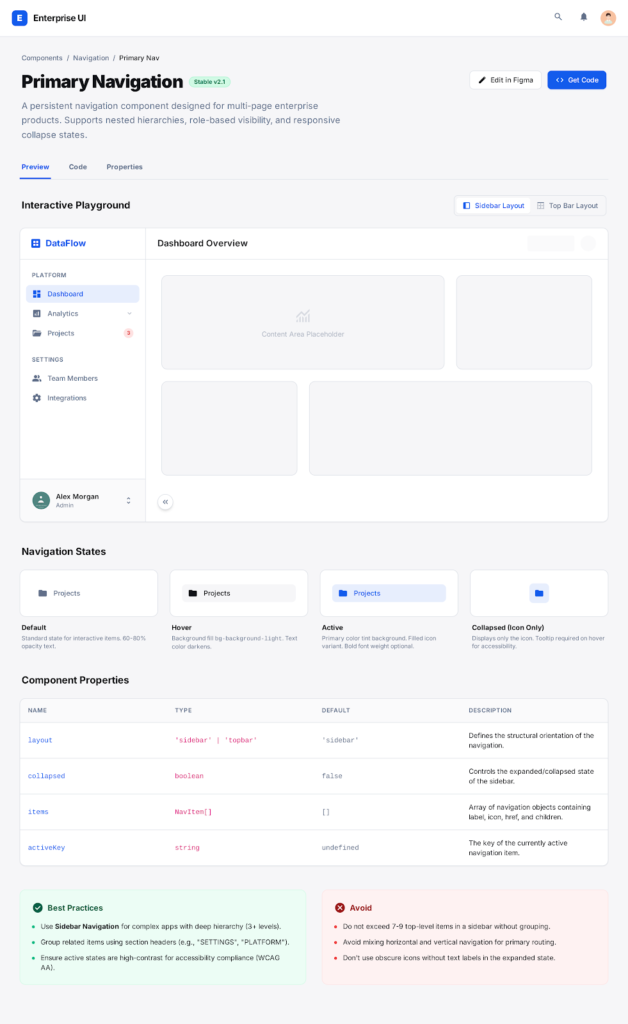
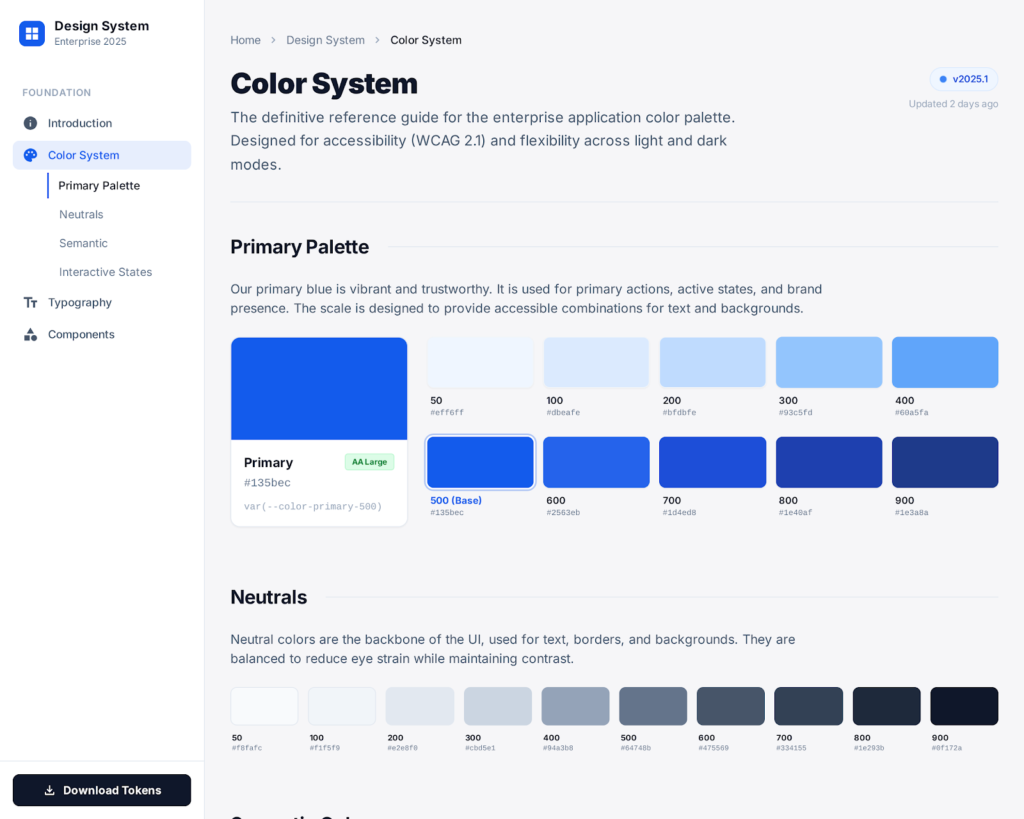
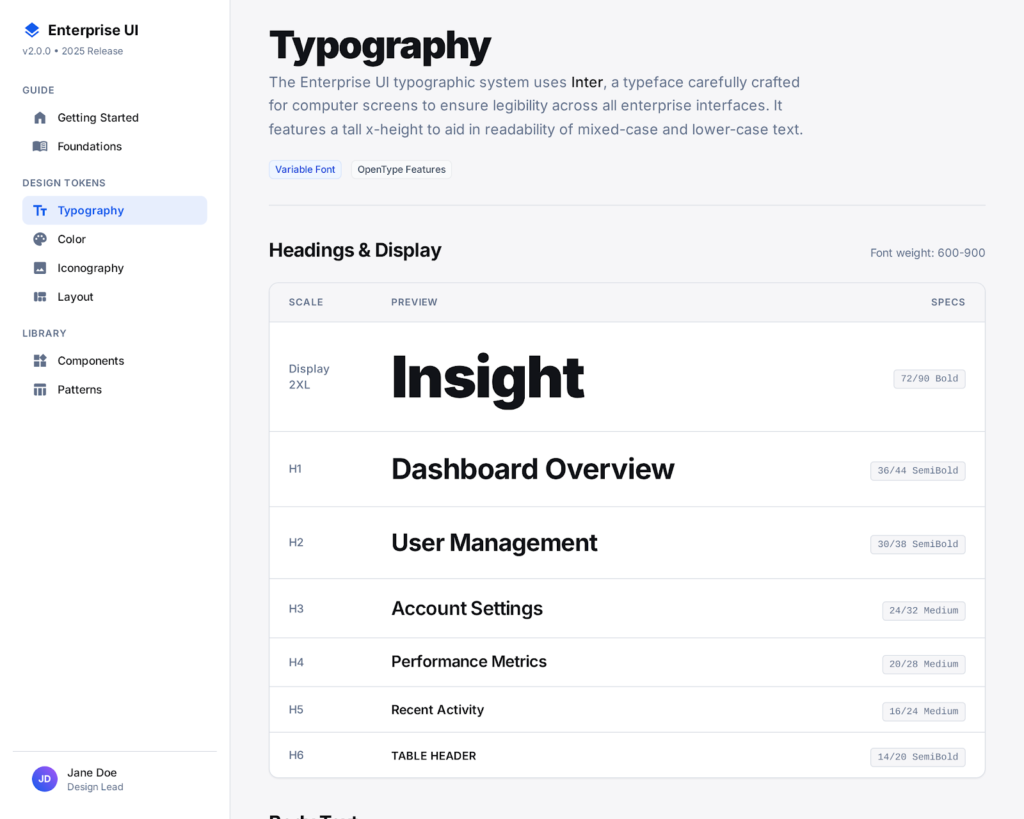
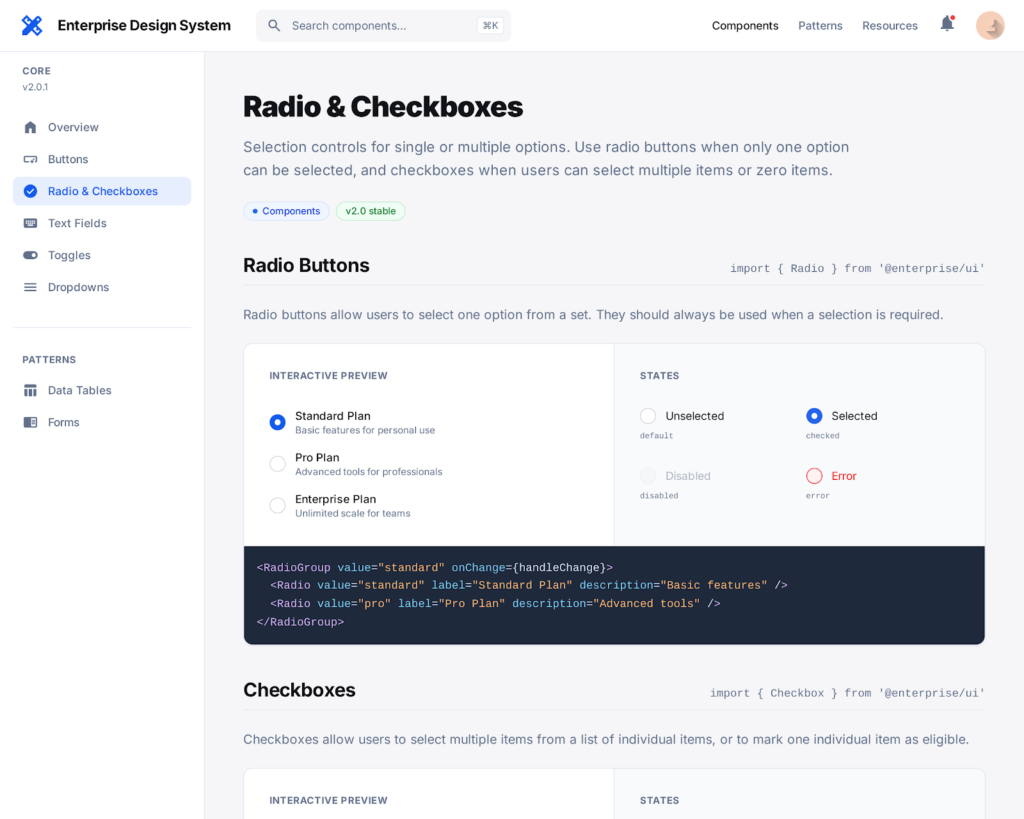
- Rapid multi-page layout generation
- Design system consistency across screens
- Exploration of modern enterprise UI patterns
- Faster iteration without manual pixel work
However, human UX judgment remained critical for:
- Defining the right problems
- Framing prompts accurately
- Evaluating usability and compliance risks
- Maintaining domain sensitivity in healthcare UX



Outcome
The result is a conceptual 2025 reimagining of OneSupport that:
- Feels lighter, clearer, and more modular
- Reflects modern enterprise UX maturity
- Demonstrates how AI can augment—not replace—UX leadership
- Preserves the original intent of global standardisation and compliance
Key Takeaways
- AI is most powerful when paired with strong UX fundamentals
- Prompt design is becoming a core UX leadership skill
- Enterprise UX success still depends on context, constraints, and clarity
- Redesigning legacy systems is as much about systems thinking as visuals
Disclaimer
This redesign is a conceptual exploration created using AI tools in 2025.
It does not represent production changes to the original OneSupport system and uses no proprietary or confidential data.