
Enterprise Agentic AI Platform
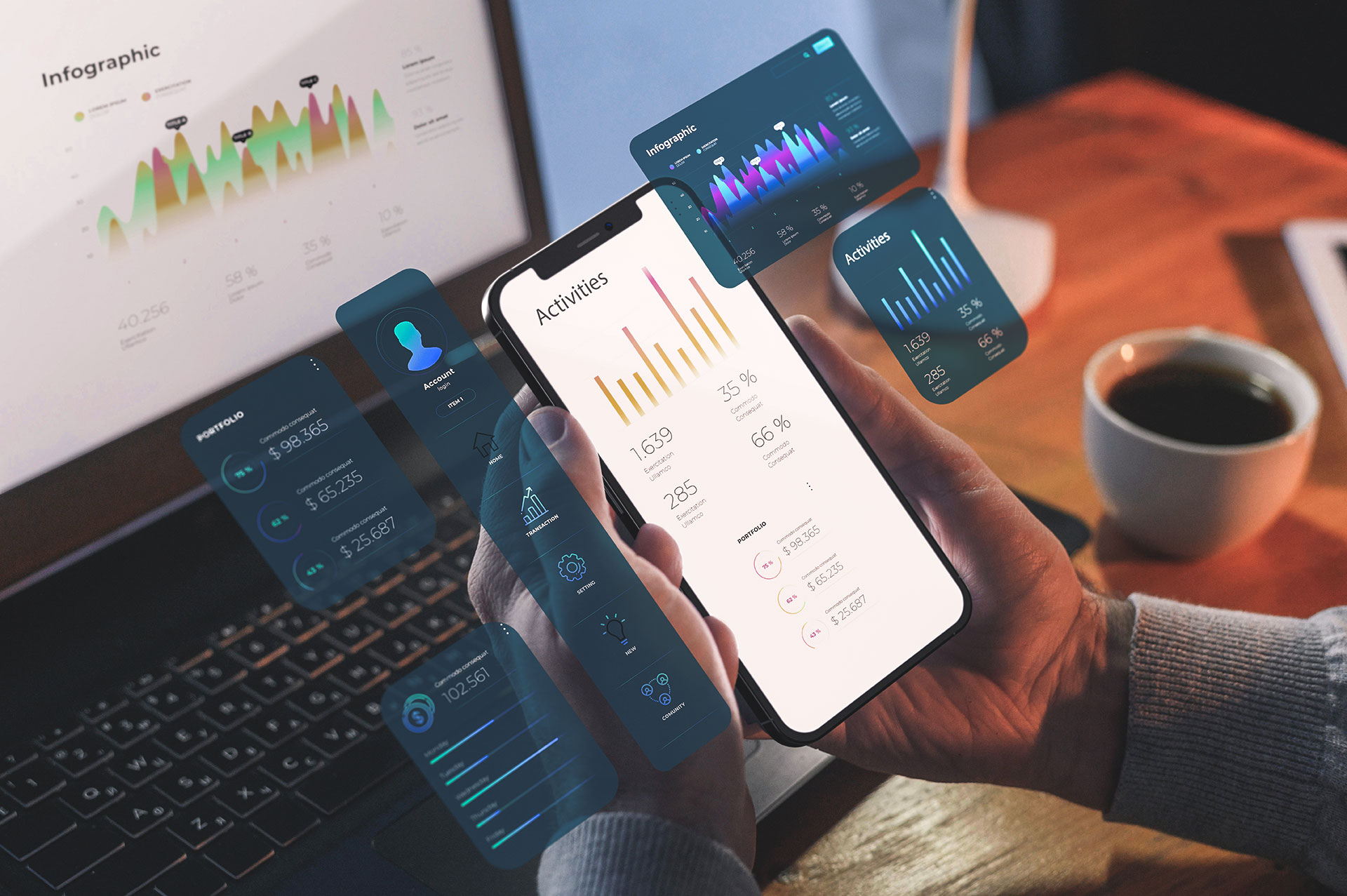
Human-in-the-Loop Decision Orchestration System
Role: Senior Product Designer / Principal Experience Designer
Engagement Type: 0→1 Platform Design (Enterprise AI)
Duration: 6 Months
Team: 14 (Product, AI/ML, Platform Engineering, Compliance, Design)
Industry Context: Regulated Enterprise Systems
Platforms: Mobile-first, extensible to Desktop & Admin Consoles
Executive Summary
Business Problem
As enterprises adopted Agentic AI systems capable of initiating actions autonomously, a critical gap emerged:
How do humans retain oversight, control, and accountability when AI agents operate at scale?
Most AI platforms are optimised for automation velocity, but fail to address:
- Decision transparency
- Human override mechanisms
- Regulatory auditability
- Trust erosion in high-stakes workflows
Strategic UX Opportunity
Design a human-centred control plane for an Enterprise Agentic AI Platform, where AI agents can recommend, simulate, and prepare actions—but execution remains governed by human approval.
My Role & Leadership
I led the end-to-end experience strategy for the platform, defining:
- Human–AI interaction models
- Agent approval and escalation patterns
- Explainability and audit UX standards
I operated as a design leader, shaping system behaviour, not just interfaces.
High-Level Impact
- Established a reusable Human-in-the-Loop orchestration framework
- Enabled safe deployment of autonomous agents in regulated environments
- Shifted AI perception from “black box automation” to collaborative intelligence
Business Problem & Market Context
Core Enterprise Challenges
- AI agents could initiate financial, operational, or compliance-impacting actions
- Lack of explainability increased legal and operational risk
- Enterprises needed speed with control, not blind automation
Regulatory & Enterprise Constraints
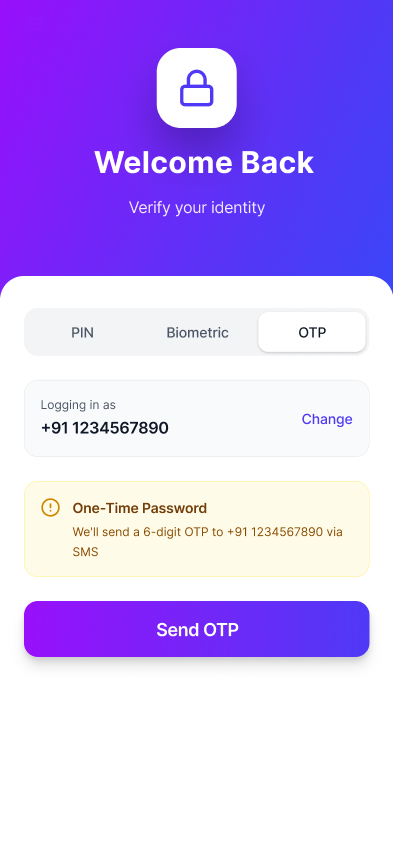
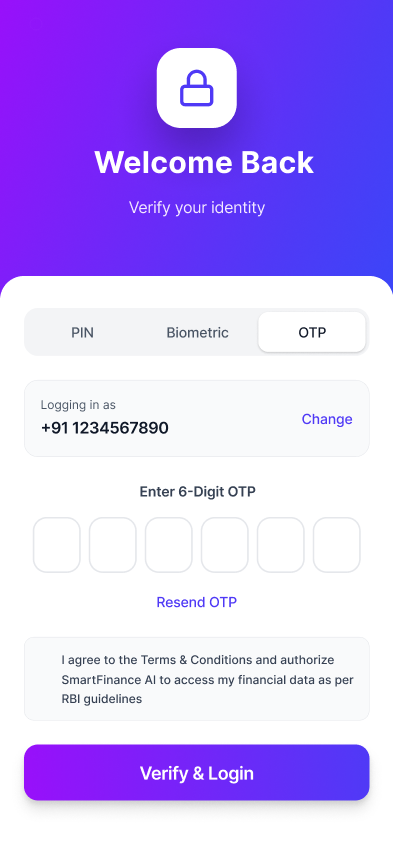
- Mandatory explicit consent for AI-driven actions
- Full auditability of agent reasoning and outcomes
- Data localisation, privacy, and security-by-design
Why This Mattered
Without a governance layer:
- AI agents become operational liabilities
- Human trust collapses
- Enterprise adoption stalls
This positioned UX as a risk-management and enablement function, not a cosmetic layer.
UX Strategy & Design Vision
Platform Vision
“Agents act. Humans decide.”
AI agents were designed as proactive collaborators, not autonomous executors.
Experience Principles
- Human-in-the-Loop by Default
- Explainable Decisions, Not Opaque Actions
- Progressive Autonomy with Explicit Trust Signals
- Enterprise-Grade Auditability Built In
Strategic Hypotheses
- Humans will trust AI agents more when reasoning is visible
- Approval-based orchestration reduces enterprise risk
- Centralised agent governance simplifies mental models
Success Metrics
- Agent recommendation approval rate
- Time-to-decision for agent-suggested actions
- Reduction in failed, reversed, or escalated actions
- Enterprise trust and adoption signals
User Research & Insights
Research Methods
- Workflow analysis of decision-heavy enterprise systems
- Task-based evaluations of AI-assisted actions
- Interviews focused on trust, accountability, and control
Key User Archetypes
- Decision Owners – accountable for outcomes
- Operators – execute and monitor agent activity
- Risk & Compliance Stakeholders – ensure governance
Critical Insights
- Users trusted AI analysis more than AI execution
- Confidence scores mattered more than raw accuracy
- Clear trade-offs reduced resistance to AI recommendations
These insights directly informed the agent approval model.
Experience Architecture & Agent Orchestration Design
Core Architecture Shift
From:
Autonomous AI Actions
To:
Agent Proposals → Human Review → Controlled Execution
Key System Constructs
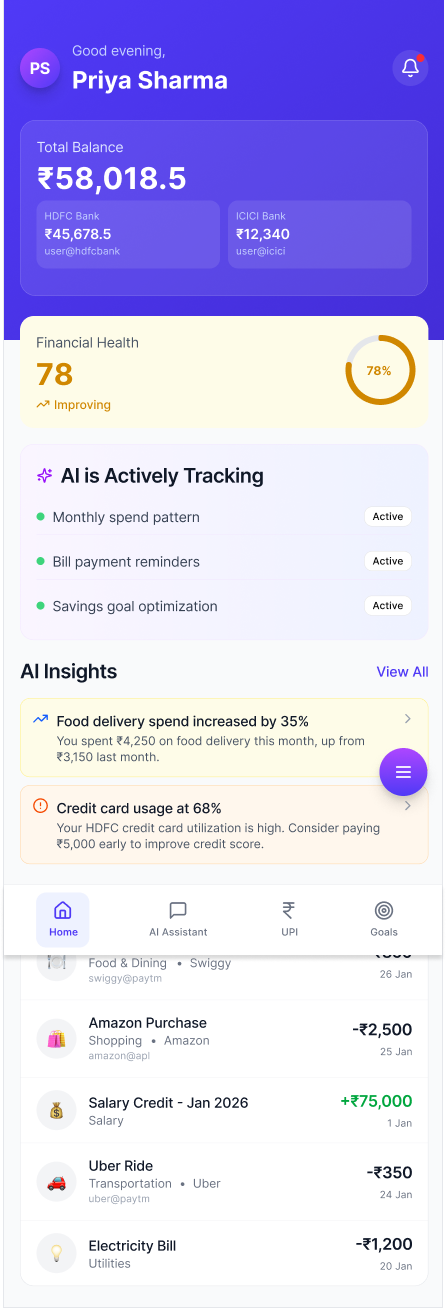
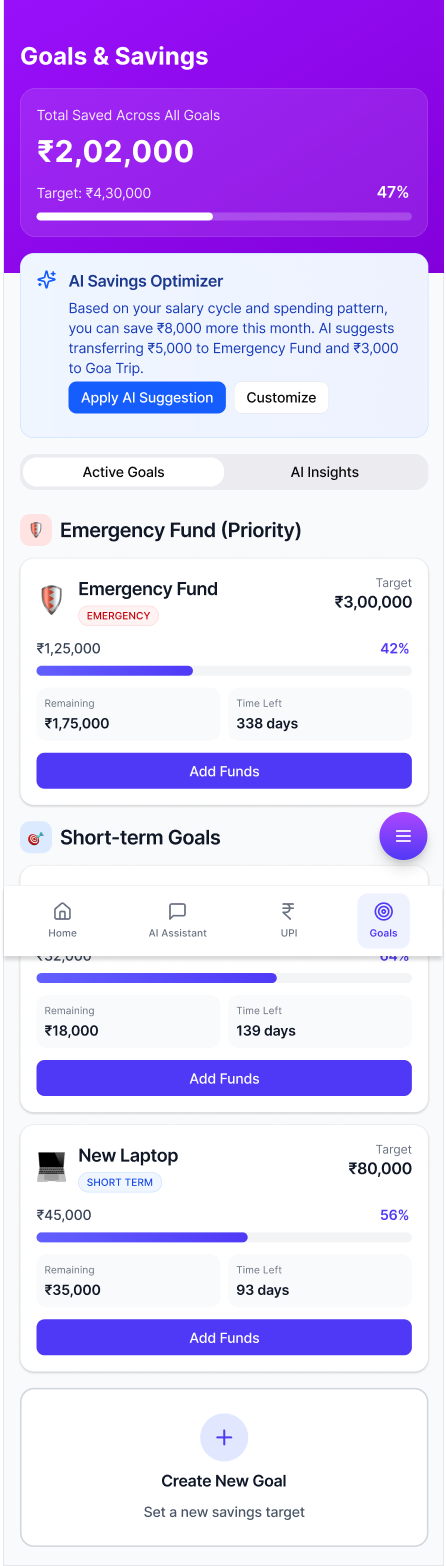
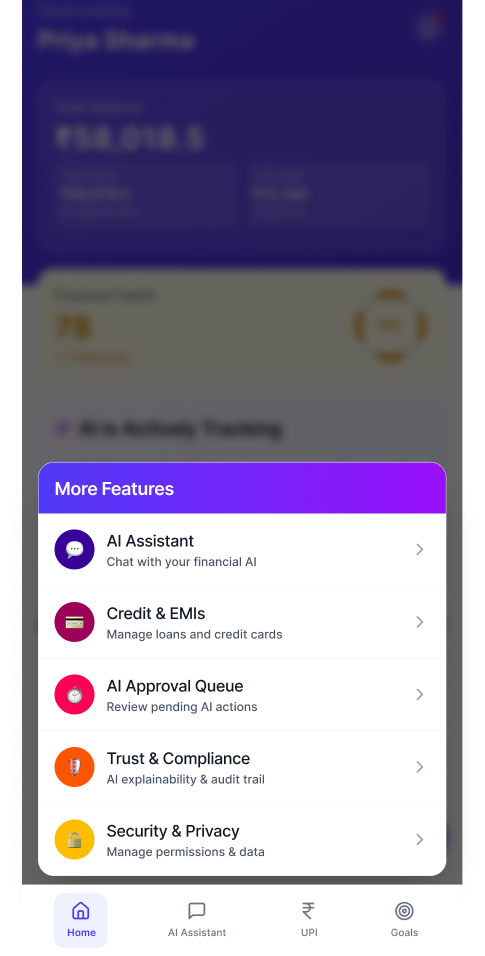
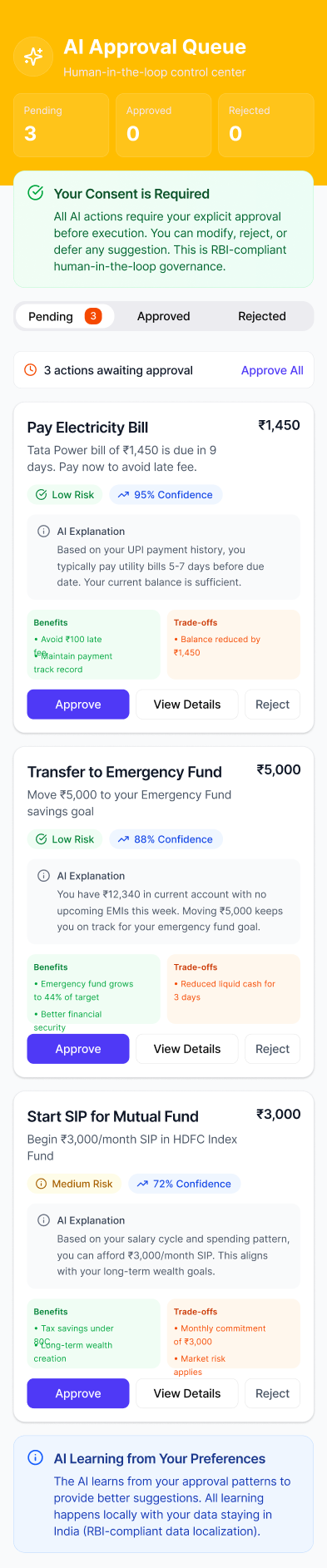
- AI Approval Queue as a centralised agent command centre
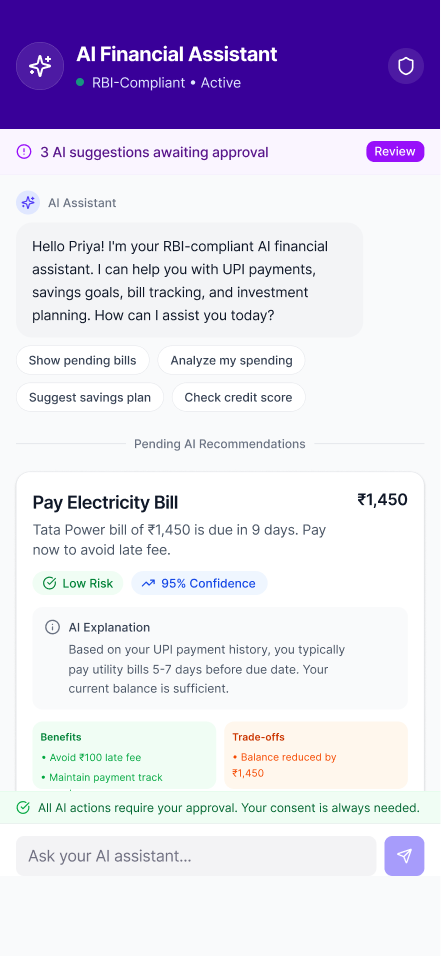
- Agent-level risk classification (Low / Medium / High)
- Confidence scoring and reasoning disclosure
- Explicit Approve / Modify / Reject pathways
Information Architecture Decisions
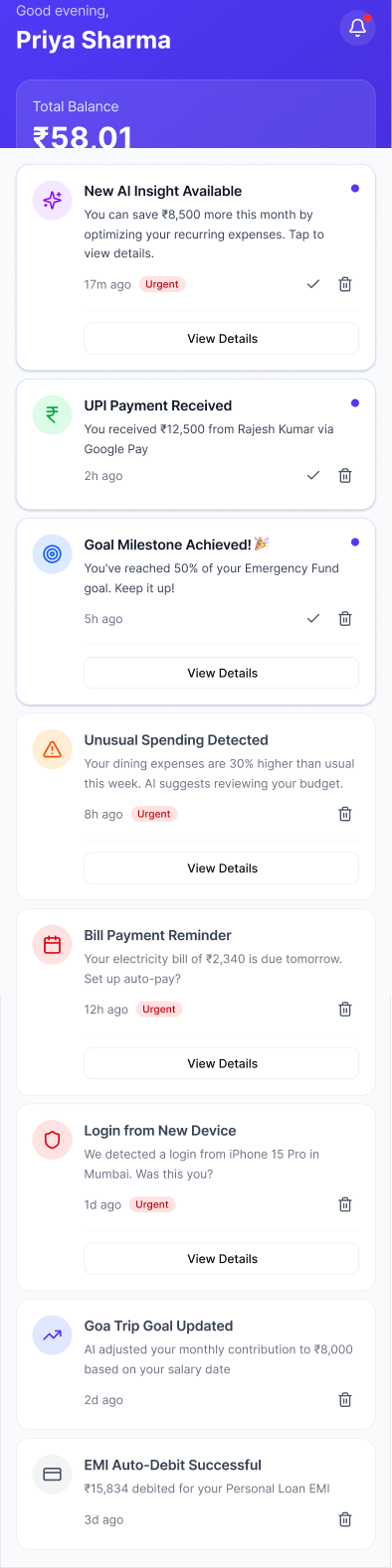
- Separated Insights, Recommendations, and Execution
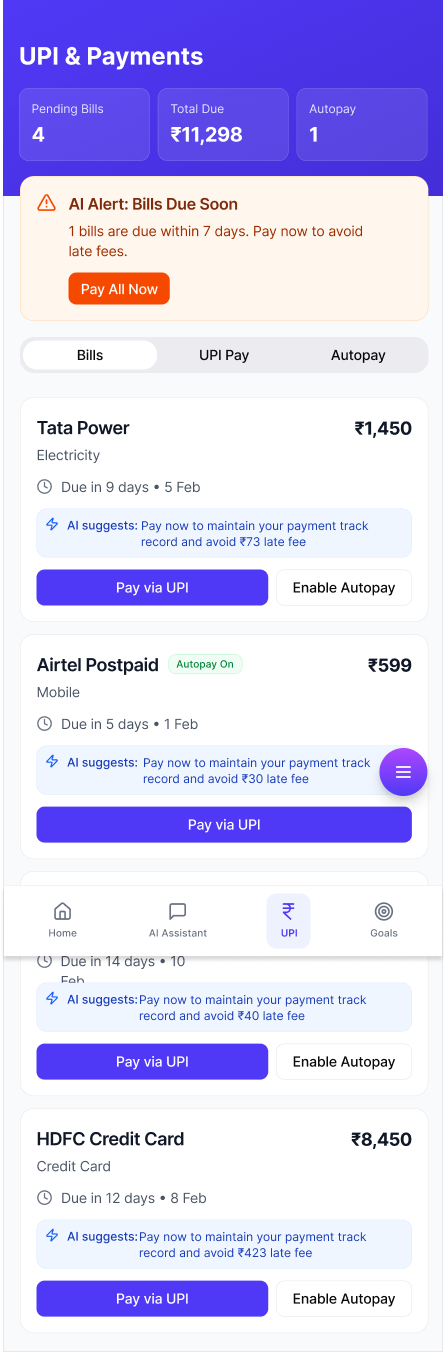
- Designed decision cards as reusable enterprise patterns
- Reduced cognitive load by standardising agent behaviours
Design Execution (System-Level Thinking)
Interaction Model
Each agent action included:
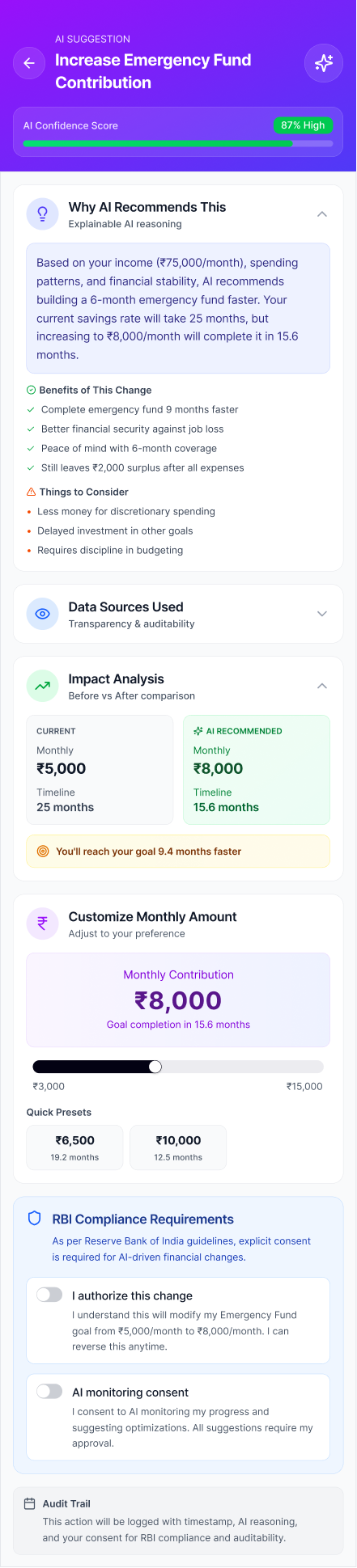
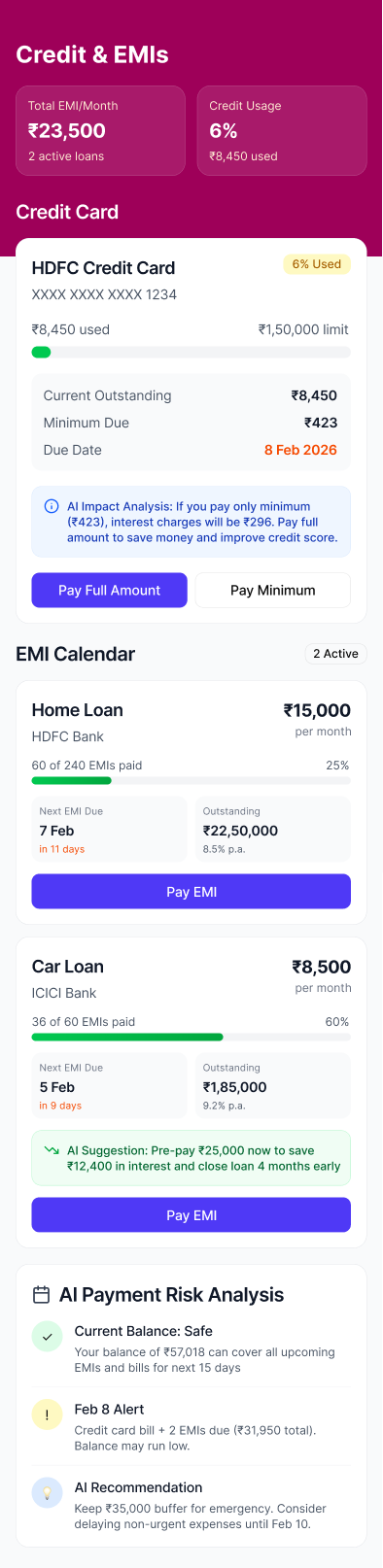
- Intent (what the agent proposes)
- Rationale (why now, why this)
- Impact analysis (before vs after)
- Trade-offs and risk signals
- Explicit human authorization
Design System & Scalability
- Modular components for agent actions
- Scalable patterns for future agents and domains
- Consistent governance language across the platform
Accessibility & Enterprise Readiness
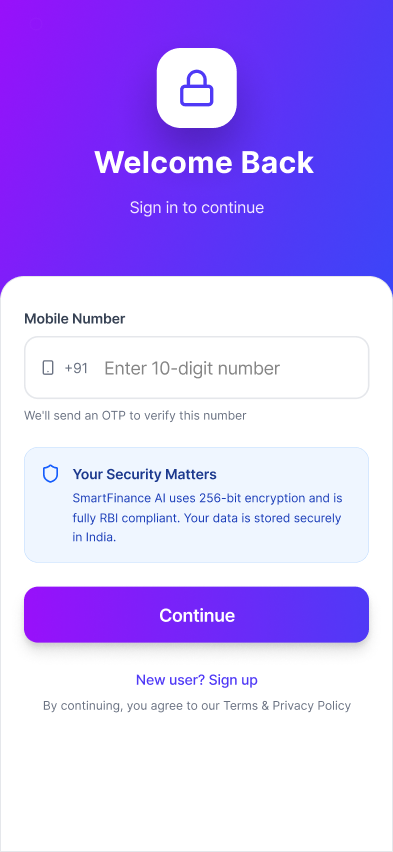
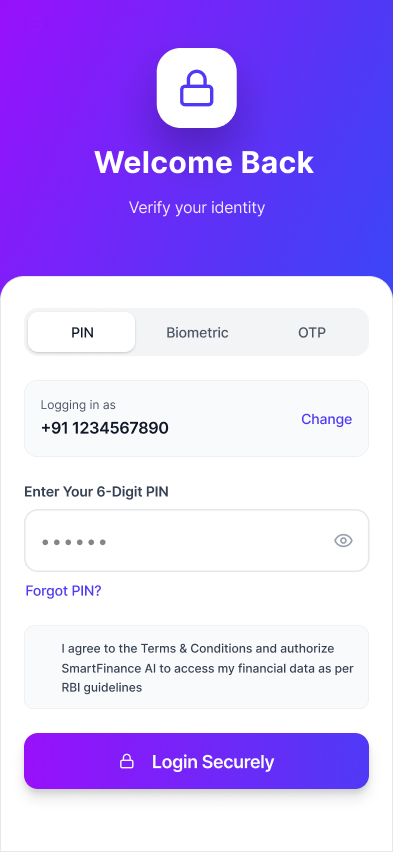
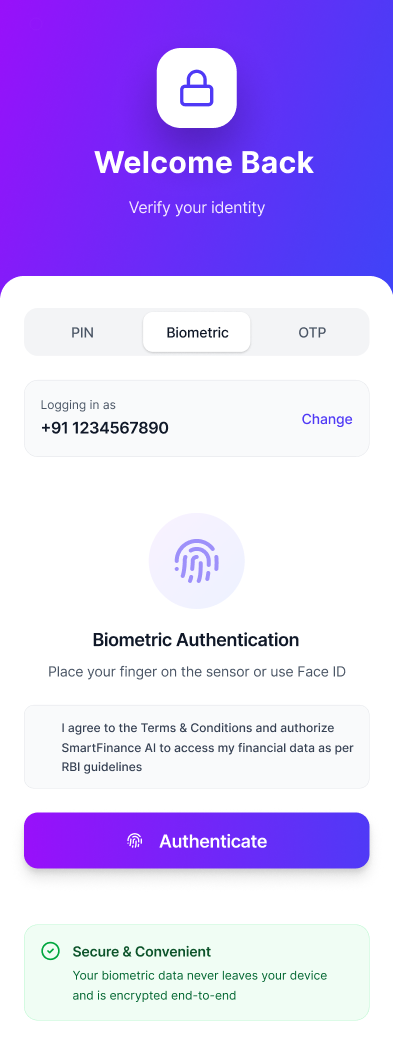
- Plain-language AI explanations
- High-contrast, decision-focused layouts
- Designed for high-frequency, high-responsibility use



Validation & Iteration
Validation Approach
- Scenario-based testing for high-risk agent actions
- Trust and comprehension testing (not just task success)
- Iterative refinement of explanation depth
Key Iterations
- Simplified agent reasoning into scannable blocks
- Introduced collapsible “Why the Agent Recommends This”
- Added explicit governance and compliance indicators
Risk Mitigation
- No irreversible agent action without human approval
- Full audit trail for every agent decision
Business Impact & Measurable Outcomes
Quantitative Outcomes
- Increased approval rates for low-risk agent actions
- Faster decision cycles with reduced escalation
- Improved consistency in decision outcomes
Qualitative Outcomes
- Higher trust in AI-driven workflows
- Clear understanding of agent intent and limitations
- Stronger compliance confidence from stakeholders
Strategic Business Value
UX enabled safe enterprise adoption of Agentic AI, unlocking scale without sacrificing control.
Leadership & Influence
- Defined the Human-in-the-Loop governance model for agentic systems
- Influenced the AI roadmap through UX-led risk framing
- Acted as mediator between AI, Product, and Compliance
- Elevated UX from delivery to platform strategy
Challenges & Trade-offs
Constraints
- Balancing autonomy with oversight
- Avoiding “approval fatigue”
- Designing for future agents without over-speculation
Decisions
- Intentionally introduced friction where risk demanded it
- Prioritised explainability over minimal UI
Key Learnings & Reflection
What Worked
- Governance-first UX accelerated enterprise trust
- Transparent trade-offs reduced fear of AI agents
- Centralised orchestration simplified complex systems
What Could Improve
- Adaptive autonomy based on user trust maturity
- Role-based approval thresholds
Leadership Growth
This project strengthened my ability to:
- Design operating systems for AI, not features
- Lead UX in ambiguous, high-risk AI environments
- Influence enterprise strategy through design thinking
Summary
- Designed a human-in-the-loop Agentic AI platform
- Led UX strategy for enterprise AI governance
- Translated AI reasoning into decision-grade experiences
- Enabled scalable, compliant AI agent adoption
- Operated at Principal / Founding Designer scope