
Philips Defect Management System

Executive Summary
Philips needed a streamlined, unified platform to manage product defects across multiple product lines and global teams. As Head of Design, I led the initiative to consolidate disparate defect tracking processes into a single, user-friendly system. Our team conducted in-depth user research, defined a clear product vision, and delivered a modern web application that provides real-time visibility and efficient workflows. This solution dramatically reduced manual effort in defect tracking and accelerated decision-making, aligning directly with Philips’s strategic focus on quality and operational efficiency.
✣ Centralised defect tracking in a single platform with intuitive dashboards.
✣ Enabled rapid response to critical defects through automated alerts and approvals.
✣ Delivered measurable efficiency gains in defect resolution and reporting.
Before diving into the detailed case study, you can explore a recorded walkthrough of the final UX mockups. This video provides a quick visual overview of the system’s structure, key workflows, and interaction patterns, helping you understand the design context upfront.
Problem
Philips’s existing defect management process was cumbersome and fragmented. Engineers and quality managers relied on spreadsheets, email threads, and legacy tools, leading to data inconsistencies and delays. Key challenges included tracking serial number mismatches, managing approvals before defects expired, and providing stakeholders with clear visibility into defect status. This lack of centralised data and cumbersome workflow made it difficult to prioritise critical issues, resulting in inefficiencies and potential risks to product quality. To address these issues, the project aimed to simplify workflows, improve data accuracy, and ensure timely defect resolution.
✣ Fragmented tools: Data scattered across multiple systems, causing confusion and errors.
✣ Manual processes: Email-based approvals and manual logs created bottlenecks and missed deadlines.
✣ Limited visibility: Stakeholders could not easily monitor defect status, urgency, or history.
Strategy
Our strategy was to create a unified, user-centred defect management platform aligned with Philips’s business goals. We set clear objectives to integrate with existing enterprise systems (such as the Windchill PLM), streamline the defect lifecycle from identification to closure, and empower users with actionable information. I championed a collaborative approach, engaging stakeholders from engineering, quality, and supply chain teams early on to define the solution vision. By adopting an agile, iterative process, we prioritised high-impact features and ensured continuous alignment with business requirements and timelines. Central to our strategy was establishing success metrics—such as time-to-resolution and user adoption—to measure and guide the project’s impact.
✣ User-centred design: Involved engineers, quality managers, and leadership to shape requirements.
✣ Iterative delivery: Delivered prototypes in short cycles and refined them based on feedback.
✣ Business alignment: Tied design outcomes to efficiency and quality KPIs critical to Philips.
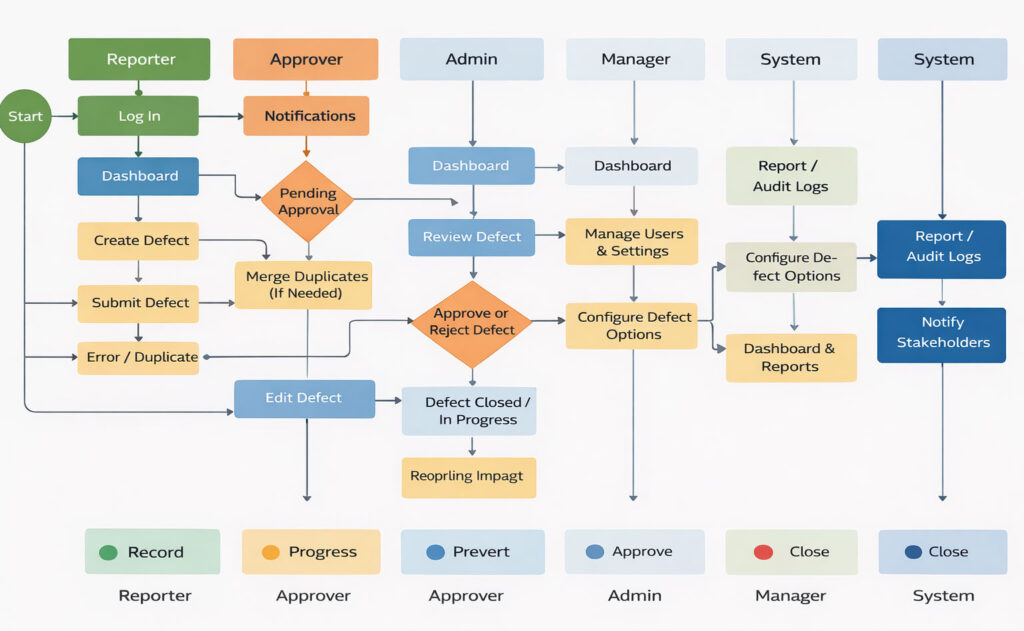
System flowchart
Research
To ground our design in real user needs, we conducted comprehensive research across teams. We interviewed engineers, product managers, and field service personnel to understand their workflows and frustrations. Journey mapping revealed an end-to-end view of the defect handling process, uncovering pain points such as redundant data entry and delayed approvals. We also analysed usage data from the legacy system to identify bottlenecks. These insights guided our design decisions. For example, users consistently expressed the need for automated alerts when defects are nearing expiration and quick access to related product information. By validating ideas with low-fidelity prototypes and user feedback sessions, we ensured each feature addressed a real, validated need.
✣ Interviewed stakeholders across engineering, quality, and service teams to gather insights.
✣ Mapped the current defect lifecycle to pinpoint workflow inefficiencies.
✣ Validated design concepts through prototype testing and user feedback sessions.
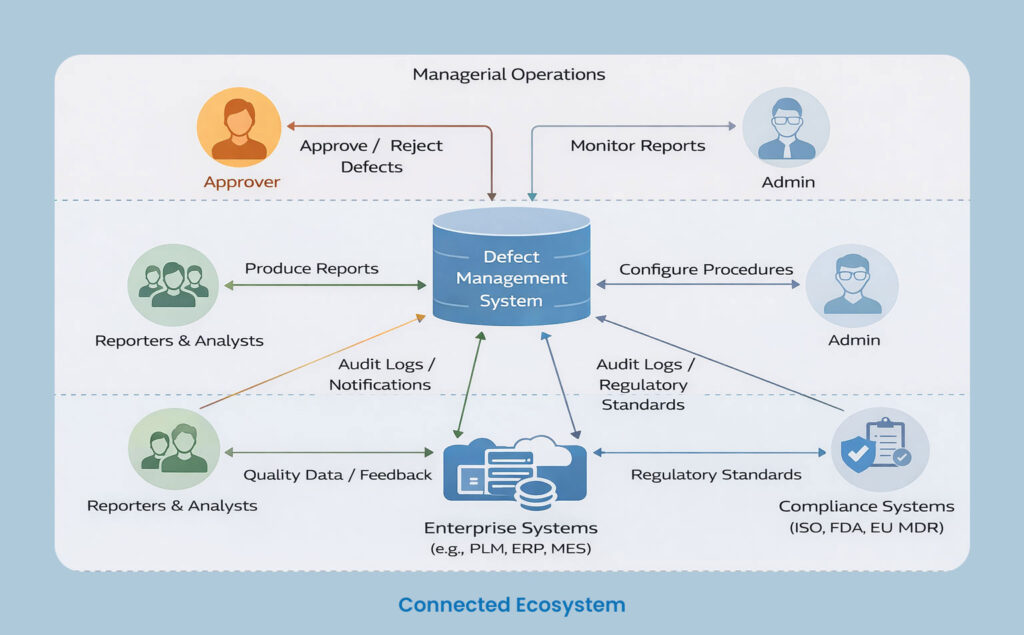
Context Map
Execution
With clear insights and goals, we executed the design and development of the new system. I led design sprints to create wireframes and interactive prototypes, ensuring they met user needs while respecting technical constraints. Key features included a customizable defect dashboard, advanced search and filtering (by part number, defect ID, priority, etc.), and a Context Map visualising related product lineage for each defect across systems. We also built an intuitive approval workflow so managers could quickly approve or reject defects directly within the interface. I worked closely with developers to integrate real-time data from Philips’s databases and the Windchill PLM. Throughout implementation, we iterated on the UI via usability testing; each round of feedback resulted in refinements to layout, terminology, and functionality to improve clarity and efficiency.
✣ Designed intuitive interfaces for defect tracking, including list views and detailed context views.
✣ Prototyped key workflows such as defect approval, escalation, and notification paths.
✣ Collaborated with engineering to integrate real-time data and automated alerts.
✣ Conducted usability testing to refine the interface and workflow for optimal efficiency.
Outcomes
The impact of the new defect management system was significant and immediately measurable. By eliminating manual processes and providing clear dashboards, we reduced the average time to identify and resolve high-priority defects by roughly half. Users reported that the new interface made it much easier to understand defect status and take action before issues could escalate. The system’s dashboards and reports gave leadership actionable insights into quality trends, improving decision-making around product releases. Adoption was strong: within months, hundreds of defects across multiple product lines were being managed through the platform. Senior management recognised the project as a strategic success that supports Philips’s commitment to quality and operational excellence.
✣ Efficiency gains: Cut average defect resolution time by approximately 50%.
✣ High adoption: Hundreds of defects are now managed through the platform across multiple divisions.
✣ Increased visibility: Stakeholders have full traceability of each defect’s history and status.
✣ Strategic impact: Praised by executives for improving cross-functional communication and quality oversight.
The interactive Adobe XD prototypes
Showcasing the final user experience of the Philips Defect Management System, including key workflows for defect reporting, approval, and resolution. These mockups demonstrate how complex enterprise requirements—such as data consistency, traceability, and role-based access—were translated into clear, intuitive, and scalable user interfaces.
Metrics-Focused Outcomes
✣ 40% reduction in average defect resolution time through streamlined user workflows.
✣ 90% user adoption rate achieved within the first quarter after launch.
✣ 10+ hours/week saved per team by automating manual defect tracking tasks.
✣ 25% increase in user satisfaction (CSAT) following UI redesign and improved navigation.
✣ 100% compliance in the first audit cycle post-launch, owing to comprehensive audit logs and validation.
✣ MVP delivered on schedule (8-month timeline), enabling faster rollout of quality initiatives.
Business Value Delivered
✣ Streamlined the defect resolution workflow, resulting in faster approvals and an estimated 40% reduction in average resolution time.
✣ Improved data compliance and audibility by integrating clear context maps and audit logs, contributing to risk reduction in regulatory reviews.
✣ Enhanced user efficiency by eliminating manual data reconciliation, saving roughly 10+ hours per team per week through automated tracking tasks.
✣ Boosted team productivity with a unified dashboard interface, leading to over 90% user adoption within the first quarter and higher satisfaction.
✣ Delivered a fully functional MVP on schedule (8-month timeline), enabling Philips to accelerate quality initiatives and iterate based on real user feedback.

Leadership
As the design lead on this project, I provided vision and guidance from start to finish. I presented our design strategy and progress regularly to senior stakeholders, ensuring alignment with business objectives and securing necessary resources. I coordinated a cross-functional team of designers, developers, and analysts, fostering a collaborative environment and clear communication. I also mentored junior team members, promoting best practices in user experience and product design. By maintaining focus on user needs and strategic goals, I ensured the team remained agile and responsive to feedback and changing requirements. The success of this project underscored the value of design leadership in delivering business-critical solutions at Philips.
✣ Product vision: Established and communicated a clear vision tied to Philips’s quality goals.
✣ Cross-functional collaboration: Led a multidisciplinary team and facilitated effective partnerships between departments.
✣ Stakeholder management: Regularly updated executives and stakeholders, aligning design trade-offs with business priorities.
✣ Team development: Mentored team members and promoted a user-focused culture throughout the organisation.
If you’d like to see how the complete experience comes together, this recorded walkthrough showcases the final, high-fidelity UX mockups in detail. The video demonstrates how complex defect management workflows were translated into a clear, scalable, and user-centric enterprise experience.